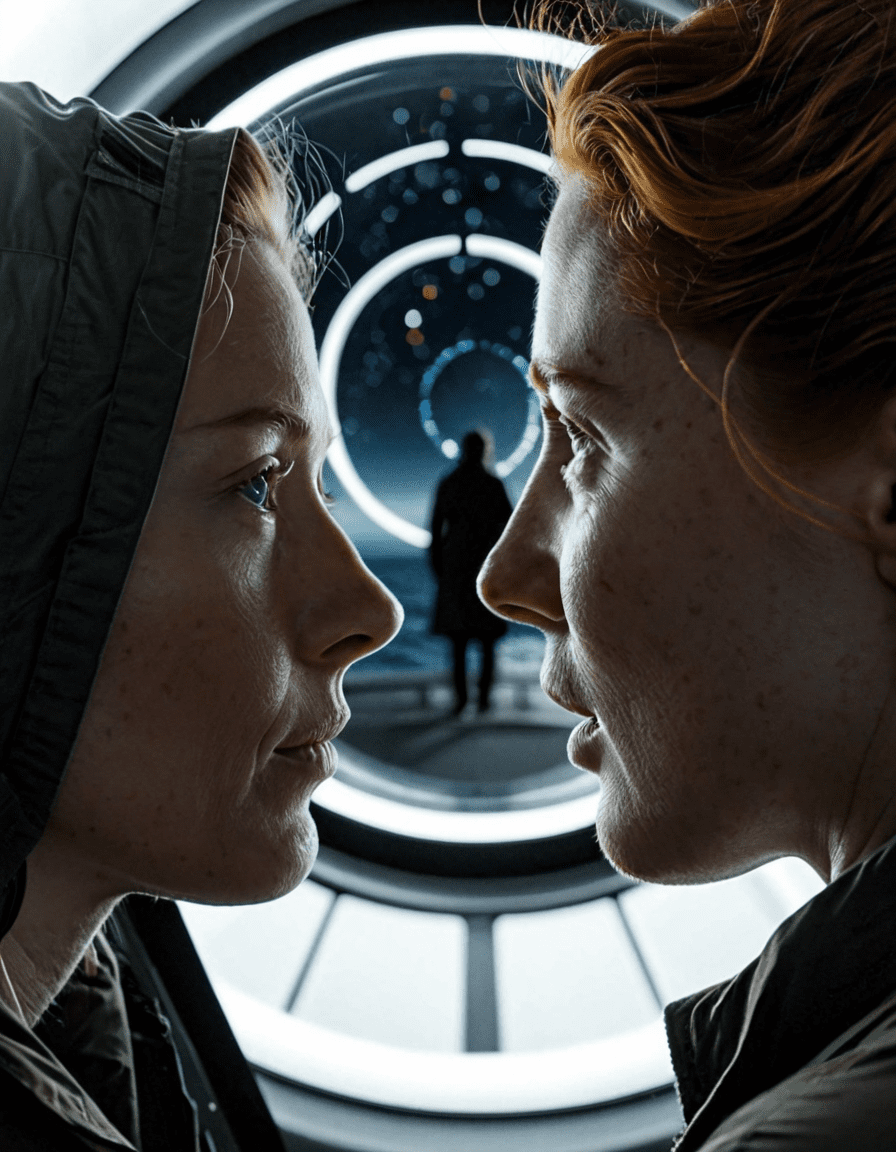
The Arrival Movie has captivated audiences since its release, weaving complex themes of time, language, and communication into its narrative. Directed by Denis Villeneuve and featuring stunning performances by Amy Adams and Jeremy Renner, this film has generated deep conversations and analyses surrounding its intricate storytelling and profound philosophical implications. Let’s dig into the elements that make the Arrival Movie a standout in modern cinema, identifying seven key aspects that elevate its narrative and spark intrigue.

7 Key Elements That Make the Arrival Movie a Mind-Bending Experience
1. Non-Linear Narrative Structure
The Arrival Movie employs a non-linear storytelling technique that invites viewers to experience time as a complex tapestry rather than a straight line. This approach enhances the emotional depth of Louise’s journey and prompts audiences to reevaluate their understanding of narrative causality. As Louise’s memories unfold, they mirror the film’s exploration of different timelines, reflecting how humans perceive their lives. This creative storytelling keeps viewers on their toes, urging them to pay close attention.
2. Rich Linguistic Themes
At its core, the Arrival Movie examines how language shapes our reality. Louise Banks, portrayed by Amy Adams, decodes the heptapod language, revealing fundamental differences from human communication. This linguistic exploration raises profound questions about determinism and free will, challenging viewers to consider how language influences not just communication but also human cognition and perception. The film sparks enlightening discussions about the power of language, making it a thought-provoking cinematic experience.
3. Emotional Resonance Through Personal Storylines
While the aliens and concept of first contact capture attention, the emotional weight of the Arrival Movie comes from Louise’s personal journey. Her experiences as a mother, intertwined with themes of love and loss, encapsulate the heart of the narrative. This emotional undercurrent elevates the film, rooting its science fiction premise in genuine human experience. It’s this emotional depth that keeps audiences engaged, reminding us that, amidst the sci-fi spectacle, the personal connections are what matter most.
4. Masterful Cinematic Techniques
Villeneuve’s directorial prowess shines through the film’s visual and auditory elements. The haunting score by Jóhann Jóhannsson perfectly complements the narrative, enhancing the film’s atmospheric tension. Cinematographer Bradford Young’s clever use of lighting and composition establishes a sense of wonder, immersing viewers in a world that feels both alien and familiar. Such attention to detail enhances the film’s themes, delivering a truly captivating experience that resonates long after the credits roll.
5. Philosophical Inquiries into Time
The Arrival Movie dives deep into philosophical inquiries surrounding time perception. It challenges traditional notions of time being a linear progression and encourages viewers to embrace a more subjective understanding of reality. By blurring the lines between past, present, and future, the film poses larger questions about existence and memory. It resonates with thinkers like Henri Bergson, provoking discussions on how our experiences shape our conception of time.
6. The Significance of Collaboration
In the Arrival Movie, the collaboration between humans and the alien species serves as a metaphor for overcoming communication barriers in the face of differences. It underlines the importance of unity and understanding, emphasizing how dialogue can transform interactions not just between individuals but across species. This message resonates particularly in today’s world, promoting empathy over conflict. It urges us to seek common ground in a landscape often fraught with tension.
7. Cultural Reflections on Humanity
The film reflects contemporary human issues through its science fiction narrative. By exploring themes of fear, misunderstanding, and our potential for peace, the Arrival Movie encourages viewers to contemplate the importance of empathy and recognizing our shared humanity. In today’s climate, filled with division, this message strikes a chord, reminding us to look beyond appearances and cultivate connections. Such reflections enhance the film’s relevance, offering insights into human nature.

The Straw Movie Approach: Maximizing Intrigue Through Creative Storytelling
In contrast, the straw movie genre often strips away depth for simplistic storytelling. While they meet basic entertainment needs, they typically lack the rich themes and emotional depth found in the Arrival Movie. Films like Snatch and Brick often prioritize shock value or superficial narratives. This comparison highlights an essential discourse in modern filmmaking: do audiences crave profound storytelling, or are they content with easily digestible content?
Halloween Der Film: A Different Kind of Narrative Intrigue
Meanwhile, Halloween der Film operates under a different narrative premise, focusing on primal fears and suspense. Unlike the cerebral approach of the Arrival Movie, it taps into emotional responses that drive viewers to the edge of their seats. While vastly different, both films showcase the range of storytelling in cinema. They offer unique insights into the complexities of human experience, whether through emotional connections or fear-driven narratives.
The intricate design of the Arrival Movie elevates it beyond traditional science fiction, forging a path toward a broader understanding of communication, relationships, and our place in the universe. As audiences reflect on its compelling narrative, it sparks intrigue and invites discussions, proving that storytelling remains a vital part of our cultural experience. In a cinematic landscape filled with both the intricate and the superficial, films like Arrival encourage us to dig deeper and explore the nuances of the human experience.
This journey through the intricacies of the Arrival Movie exemplifies how profound storytelling resonates with audiences, leaving a lasting impact and inspiring future filmmakers to prioritize depth in their narratives. Whether you’re a lifelong cinephile or just discovering the magic of cinema, the Arrival Movie is a must-see that evokes rich conversations and reflections long after the final scenes play out.
So, ready to get shredded and gain muscle while pondering these mind-bending concepts? Let that inspiration drive you forward, just like the characters in the Arrival Movie!
Arrival Movie Trivia: Mind-Bending Facts That Intrigue
The Concept Behind Arrival
Did you know that Arrival draws heavily from a short story titled “Story of Your Life” by Ted Chiang? This story dives deep into themes of language and perception, much like how filmmakers like those behind Victoria showcase incredible narratives through innovative techniques. Chiang’s work inspires the film’s unique narrative structure, making the arrival movie an experience that sticks with viewers long after the credits roll.
Interestingly, this film also features a stellar cast, including Amy Adams in the lead role, who brings a captivating complexity to her character. You might be surprised to learn that the cast Of The Godfather could have looked quite different had the film chosen other actors. Just like in Arrival, every casting decision shapes the story, reinforcing its impact. As with other complex films, the arrival movie draws you in, making you ponder your own thoughts on time and communication.
The Language Connection
One of the intriguing elements of the arrival movie is its focus on linguistics. In the film, communication is presented as a bridge for understanding, rather than just a tool for conversation. This theme mirrors the idea of breaking boundaries, much like what you’ve seen in films about empowering characters, like Shegods, where language often plays a pivotal role. It’s fascinating how visual storytelling symbolizes understanding, as seen through the ethereal scripts and symbols the aliens use.
Moreover, the film isn’t only about aliens—it’s about connecting with one another in a deeper way. The character played by Emily Rios adds texture to the film, perhaps reminding us that relationships can change our perspectives. Just as Stockton Rushs adventures push limits in technological innovation, the arrival movie challenges our traditional notions of time and space, forcing us to examine how we grasp reality.
Letting Go of Expectations
The arrival movie ultimately communicates a profound message about accepting the unknown. It challenges audiences to think about their perspectives on life, much akin to the way stories like Cherry explore redemption and desire. When you compare Arrival to films like Deja Jackson, both tackle personal journeys filled with rich emotional layers, leading viewers to question their experiences.
In the end, what makes the arrival movie unforgettable isn’t just the story itself, but the conversations it ignites. By intertwining drama, science fiction, and philosophical inquiry, it beckons viewers into a world of possibilities—one where every decision has the power to reshape reality. So, whether you’re reflecting on the meaning of time or pondering languages that bind us together, this film leaves a lasting impression that’s well worth the watch.