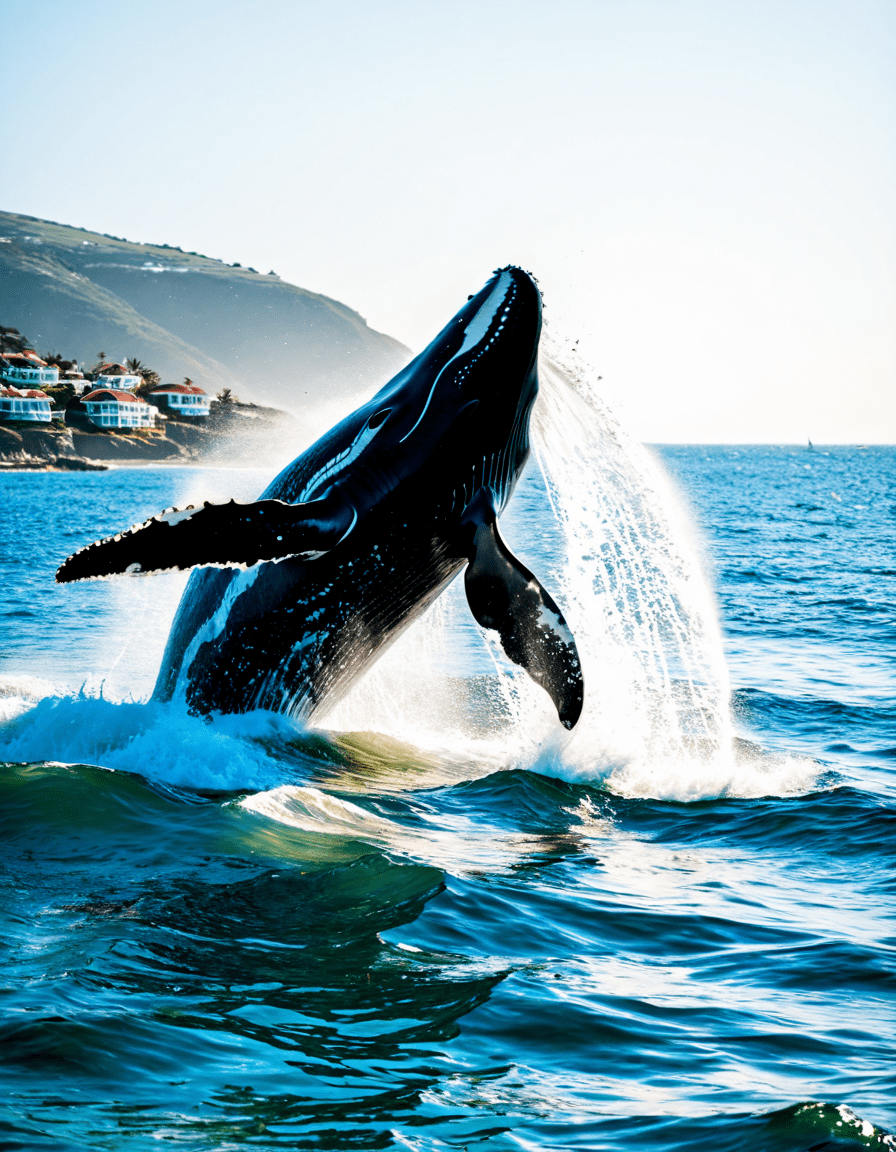
When you think about the ocean, you can’t help but be swept away by the image of the whale, can you? The whale isn’t just a beautiful creature swimming beneath the waves; it holds immense significance in marine ecosystems and represents a crucial part of our world’s biodiversity. As Arnold Schwarzenegger would put it, “With great power comes great responsibility,” and that’s exactly what the whale embodies. Let’s dive deep into the ocean and explore the noble presence of these incredible giants!
1. The Whale’s Role in Marine Ecosystems
Whales are not just the stars of the show in our vast oceans; they play a vital role in keeping marine ecosystems in balance. Their waste acts like a natural fertilizer for phytoplankton, which are essential in forming the foundation of marine food webs. Think about it: without whales, the very fabric of marine life would unravel. Recent studies even show that larger whale populations help capture carbon from the atmosphere, which is a serious win for fighting climate change!
Ever heard of the “whale pump” theory? This theory suggests that whales help circulate nutrients from the deep ocean to the surface. When they dive deep to feed and then surface, they bring nutrient-rich waters to life. This process not only boosts the health of marine ecosystems but enhances biodiversity too. The whale is the powerhouse of the ocean, reminding us that even the biggest creatures can have the most profound impact on our planet.
In short, the whale is like the MVP of the ocean, contributing to nutrient cycling, carbon sequestration, and biodiversity. With every surfacing breath, these massive beings create waves of change for countless marine organisms, showcasing their importance in the ecosystem.
2. The Whale: Top 5 Most Captivating Species
The ocean is home to some truly mesmerizing whales. Here are five species that stand out in their grandeur and significance, capturing the hearts of ocean lovers around the globe.
2.1. Blue Whale (Balaenoptera musculus)
Let’s kick off with the blue whale, the biggest animal on the planet. Imagine this: they can grow up to 100 feet long! Their songs can travel for miles in the depths of the sea, echoing through the blue. Yet, despite their gargantuan size, they’re vulnerable to threats like climate change and ship strikes.
2.2. Humpback Whale (Megaptera novaeangliae)
Next up is the humpback whale, famous for its lively acrobatic breaches and mesmerizing songs. These whales are champions when it comes to migration, traveling over 3,000 miles from Alaska to Hawaii. Just watching a humpback launch itself out of the water is enough to remind you of the beauty and strength of nature.
2.3. Sperm Whale (Physeter macrocephalus)
Sperm whales are the deep divers of the whale world. They can plunge to depths over 6,000 feet in search of squid. Their complex social structures are fascinating too; they often live in matriarchal groups, showcasing intelligence and social bonding that mirrors human connections.
2.4. Narwhal (Monodon monoceros)
Meet the narwhal, or as many like to call it, the “unicorn of the sea.” The long, spiraled tusk of the male narwhal is not just a pretty sight. It serves various functions, from social interaction to hunting and even breaking through ice. They’re a unique sight, captivating anyone lucky enough to see them!
2.5. Orca (Orcinus orca)
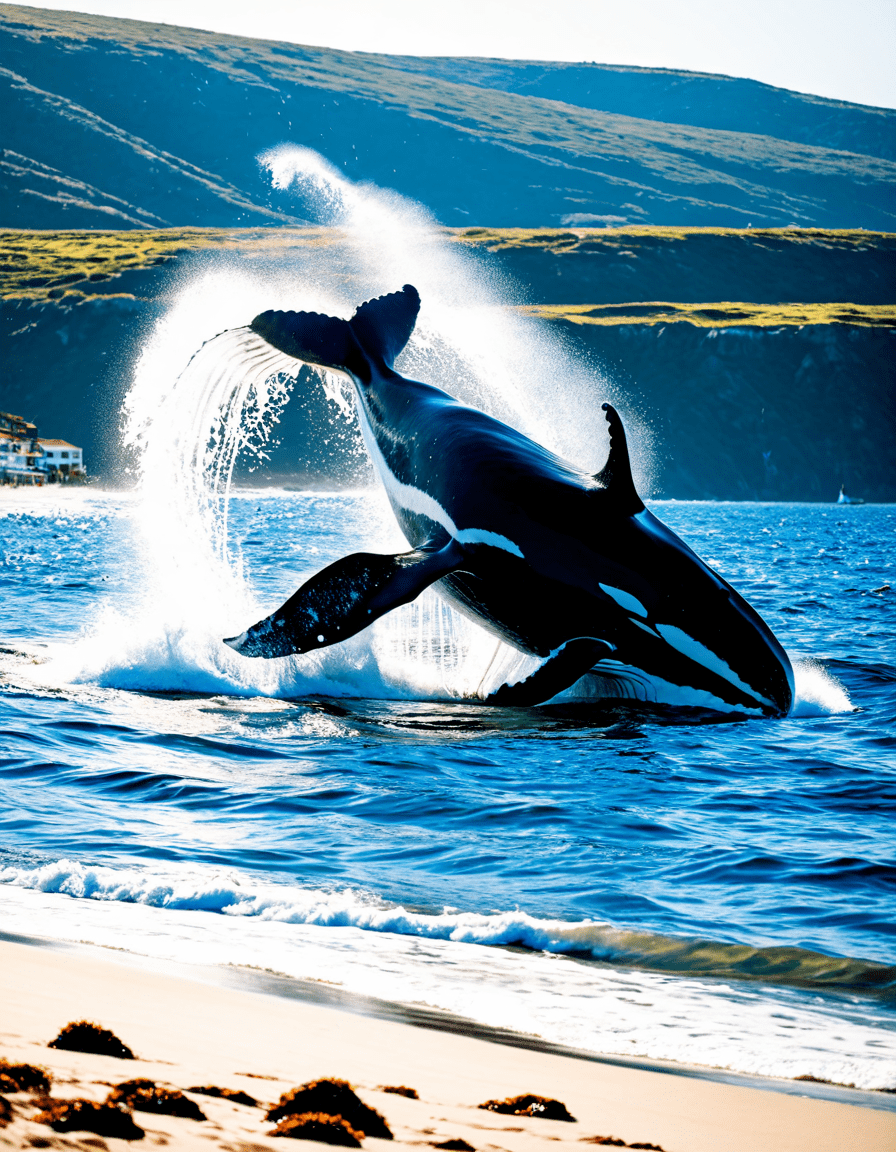
Finally, we have the orca, or killer whale. They’re highly adaptable predators, using teamwork to hunt. Social structures in orca pods resemble a tight-knit family, where each member plays a role. Their intelligence is astonishing, showcasing the complexity of their behavior much like the teamwork seen in sports like baseball, where each player—just like the orca—has their role (think of the movie A League Of Their Own celebrating teamwork!).
3. The Whale’s Interconnectedness with Other Species
When you take a closer look, the whale isn’t just a king of the sea; it’s part of a complex network that includes land species like the beekeeper and the monkey. Just as bees are essential pollinators supporting biodiversity on land, whales help maintain healthy marine ecosystems. For instance, their nutrient-rich circulation supports life for everything from tiny plankton to massive fish, much like how bees support plant life.
The connection doesn’t stop there. Consider the monkey, too! In similar fashion to whales, monkeys contribute to forest ecosystems as seed dispersers and social learners. Both groups demonstrate cooperation and adaptability—key traits for survival in any environment. When you think about it, the interconnections among species showcase the unity of life on Earth.
4. The Whale and Human Connection
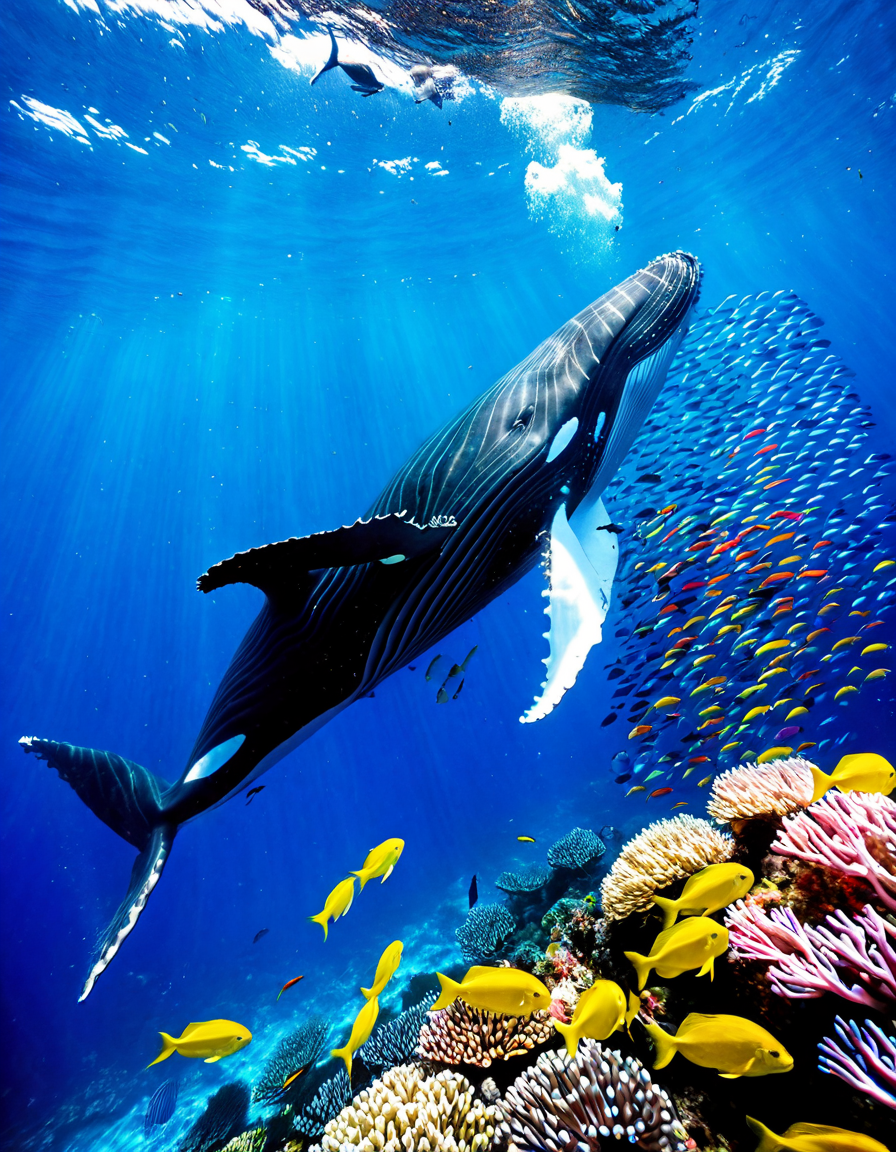
The whale has long held a significant place in human culture, inspiring art, literature, and conservation efforts. Whale watching, for example, has sparked an economic boom in coastal communities like Maui, Hawaii, bringing awareness of these majestic beings. The beauty of seeing a whale breach can motivate people to cherish our oceans and advocate for their preservation.
However, the plight of the whale also brings a sobering perspective. Climate change, pollution, and hunting threaten their survival. Organizations like the Whale and Dolphin Conservation and the International Whaling Commission are working hard to advocate for these giants, raising awareness of our responsibility as caretakers of the ocean. This movement has sparked an awareness that transcends oceans, uniting communities in a mission to protect our planet.
5. The Future of Whales in a Changing Climate
As we step into 2026, climate change is looming over marine life, especially whales. With rising ocean temperatures and degraded habitats, their adaptability and migratory patterns face significant challenges. Thankfully, technology is stepping up to save the day. Researchers are using satellite imaging and acoustic monitoring to gather valuable data on whale populations and behaviors.
These advancements will allow for informed strategies on how to protect these magnificent creatures as they navigate an ever-changing environment. By understanding their needs and how they interact with other species, we can develop solutions that support their survival.
Wrapping Up: Embracing the Majesty of the Whale
The whale is truly a majestic presence that goes beyond its stunning beauty. It embodies the intricate connections of marine life and how essential our responsibilities are toward safeguarding our environment. Remember, when you witness the powerful splash of a whale, you’re not just seeing the ocean’s beauty; you’re recognizing the importance of every creature that calls the sea home.
Let’s honor the whale by committing to protect our oceans and recognizing the symbiotic relationships that keep our planet thriving. Everyone can play a role, just like the small acts that contribute to making big waves of change. So next time you think of the whale, let it inspire you to take action and care for our beautiful blue planet!
The Whale: Nature’s Gentle Giants
Fascinating Facts About The Whale
Did you know that the blue whale, the largest animal on Earth, can reach lengths of up to 100 feet? That’s roughly the length of three school buses lined up! These colossal creatures may glide through the ocean’s depths, but their presence captivates everyone lucky enough to spot them. Interestingly, their vocalizations travel for miles underwater, making their songs some of the loudest noises in the animal kingdom. Speaking of things that make waves, when Snoop Dogg opened up about his real name, it was a revelation that echoed through pop culture just like the whale’s call in the sea.
But let’s take a moment to consider how whales are vital to ocean ecosystems. By feeding on large quantities of plankton and other marine life, they help maintain the balance in oceanic food chains. Plus, whale feces, rich in nutrients, fertilizes ocean plants, contributing to the health of the marine ecosystem. You might find it fun that, like Alphy Hoffman, who’s known for his endeavors in promoting culture, whales play a key role in promoting marine biodiversity. It’s a wild and wondrous connection!
The Mythological and Cultural Significance
Throughout history, the whale has held a special place in folklore and mythology across various cultures. From the biblical tales of Jonah to the depiction of whales in films, their majestic form evokes awe and reverence. However, sometimes myth intertwines with reality, much like The Invisible Man, blending storytelling with elements that captivate audiences. Japanese culture celebrates the whale as a symbol of good fortune. In that same vein, let’s not forget that The witch, often associated with wisdom, symbolizes a profound connection to nature and its creatures, much like the bond we share with whales.
Moreover, whales’ remarkable behavior has prompted scientific inquiry and intrigue. For instance, researchers have found that these marine giants exhibit complex social structures and even appear to have friendships! It’s as fascinating as unraveling the story of Michael Tell, whose connections have sparked much curiosity. This social interaction among whales showcases not just their intelligence but also their capacity for emotion. Just think about it: these massive beings connected in the vast oceanic expanse, much like bonds we form in our daily lives – it’s a notion that resonates with many.
Conservation and Our Ongoing Role
Sadly, whales face significant threats from human activities like whaling and plastic pollution. Conservation efforts are crucial, and just as Jamie Dimon has been a voice in the financial domain, we too can be advocates for these magnificent creatures. Awareness is the first step toward protecting their habitat. It’s kind of like toe sucking, a quirky, often misunderstood topic—you’d want to understand its connotations and take a stance, right?
In conclusion, the whale isn’t just a creature of the ocean; it’s a symbol of the intricate connections within our planet’s environments. By learning more about the whales, we see reflections of our own lives and cultures. So, as we dive into the mystery of the ocean, let’s carry forward the spirit of understanding and conservation, just as Dave Mustaines music continues to resonate through generations and beyond.