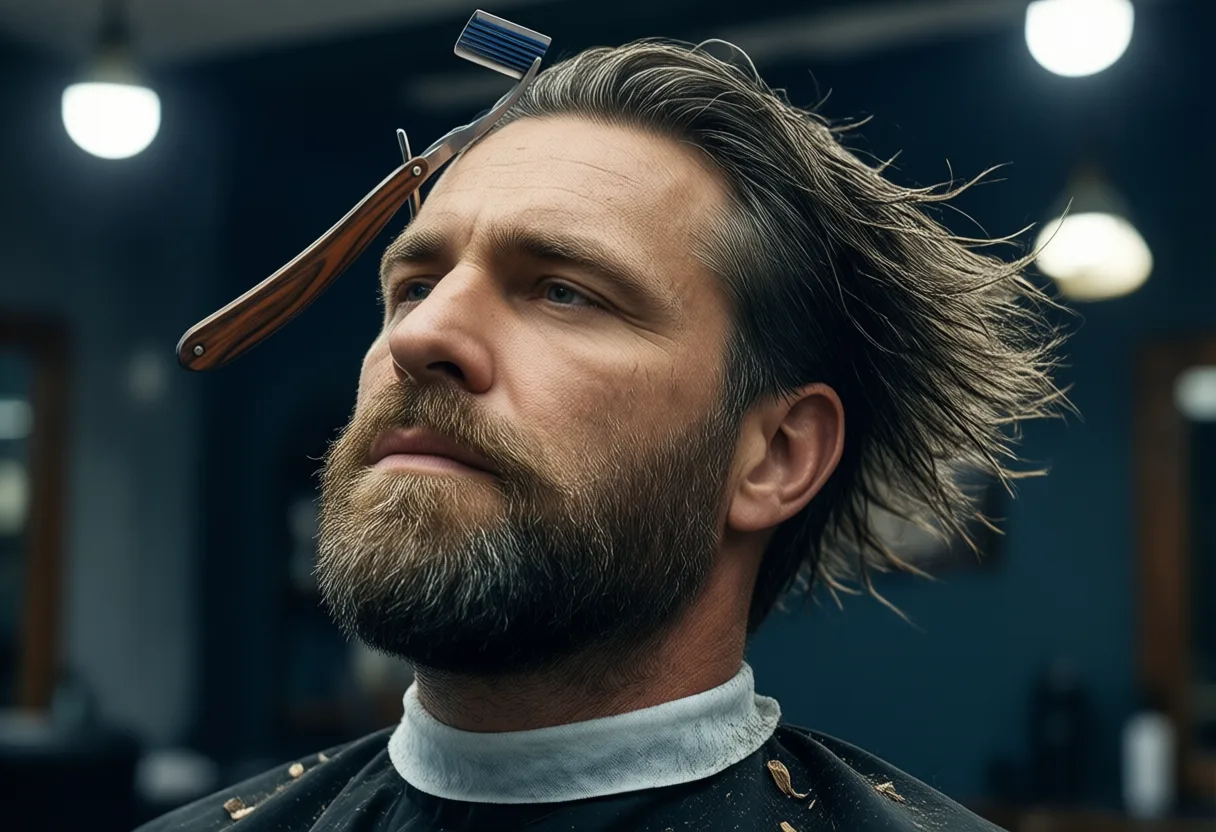

Your Hair Isn’t just a style choice-it’s the frame around your face, shaping first impressions before you say a word. Just like building muscle, the right haircut works with your natural structure to highlight strength and balance.
How to Choose the Right Cut for Your Face Shape
Understanding facial geometry is the foundation of a Great haircut. Unlike trends that come and go, face shape remains constant-and smart styling starts there. The goal isn’t to follow what’s popular, but to find what Works: a cut that enhances your bone structure, not fights it.
Think of your hairstyle like a tailored suit. A perfect fit doesn’t draw attention to the fabric-it draws attention to You. The same principle applies: A well-chosen cut balances proportions, creating symmetry where none naturally exists.
Ask yourself: Does my face appear longer than it is wide? Are my cheekbones the widest point? Is my jaw sharp or softly rounded? These observations matter more than any influencer’s look. Once you understand your shape, the rest becomes strategy-not guesswork.
Understanding the Relationship Between Facial Structure and Hairstyle Balance
Hairstyles alter perception through volume, length, and texture. A skilled cut uses these tools to create optical corrections-adding height to elongate a round face, or reducing width at the temples to soften a broad forehead.
Volume on top can stretch a short face vertically, while shorter sides prevent a square jaw from looking boxy. The key is contrast: Height versus width, fullness Versus taper, texture versus smoothness. This contrast shapes how light and shadow play across your features.
For instance, someone with a narrow face might avoid slicked-back styles that emphasize thinness. Instead, side volume or a textured fringe adds horizontal balance. It’s not about hiding your face-it’s about showcasing it with intention.
What Your Face Shape Says About Your Best Look
Your face shape isn’t a limitation-it’s a blueprint. Each type responds differently to cuts, and knowing yours turns styling from trial-and-error into precision engineering.
Oval Face: The Canvas of Possibility
Oval faces are often considered the most balanced, with a slightly longer length than width and gently curved jaws. This symmetry means Almost any cut can work, but that doesn’t mean all are equally effective.
A true oval allows room for experimentation-fade variations, pompadours, even longer tops-but the best results still consider proportion. Going too flat on top can make the face appear longer; too much volume can distort its natural harmony.
The advantage here is adaptability. Whether you’re in a boardroom or hitting the gym, an oval face supports clean transitions between formal and casual. Stick to moderate height and tapered sides for a polished daily look.
Round Face: Elongate to Elevate
Round faces feature equal width and length, with soft jawlines and full cheeks. The styling mission? Create vertical lift to counteract width.
Avoid cuts that add bulk at the sides-think crew cuts with heavy temples or blunt bangs. Instead, Prioritize height on top And keep the sides tight. A high fade with textured quiff pulls the eye upward, sharpening the silhouette.
Side parts and off-center sweeps also help break circular symmetry. The illusion of length isn’t subtle-it’s transformative. When done right, the difference isn’t just in the mirror; it shows up in photos, video calls, and confidence.
Square Face: Highlight the Architecture
Square faces boast strong jaws, wide foreheads, and defined angles. They project strength-which means your haircut should complement, not compete with, that power.
Tight fades work well, especially when paired with a textured top. Avoid excessive height that widens the forehead further. Instead, Moderate volume with a natural finish Keeps the focus on your jawline without exaggerating width.
Short crops and classic tapers enhance masculinity without veering into ruggedness. Think precision over drama. A crisp line-up finishes the look, turning your face into a statement of discipline-much like a six-pack carved from consistency.
Heart Face: Balance the Proportions
Heart-shaped faces have broad foreheads narrowing to a pointed chin. The challenge? Soften the top without losing definition below.
Avoid spiking the crown or adding volume at the temples. Instead, Use fringe or side-swept layers to reduce forehead exposure. A textured crop with a gradual fade shifts weight downward, creating equilibrium.
Medium-length styles with movement work better than rigid forms. The goal isn’t to hide your forehead-it’s to integrate it into the whole. When balanced, heart shapes carry elegance with edge, ideal for transitioning from office to evening.
Rectangular Face: Shorten the Frame
Rectangular (or oblong) faces are longer than average, with consistent width and straight edges. The aim here is to visually shorten, not stretch.
Avoid high-volume styles that add height. Instead, Opt for fuller sides and mid-length tops That bring width to the middle of the face. A medium fade with a soft pompadour or modern mop cuts the length illusion.
Bangs or textured fringes also help break the vertical line. Keep the back and sides slightly longer than usual-going too short can elongate further. The result? A grounded, proportional look that matches a strong physique.
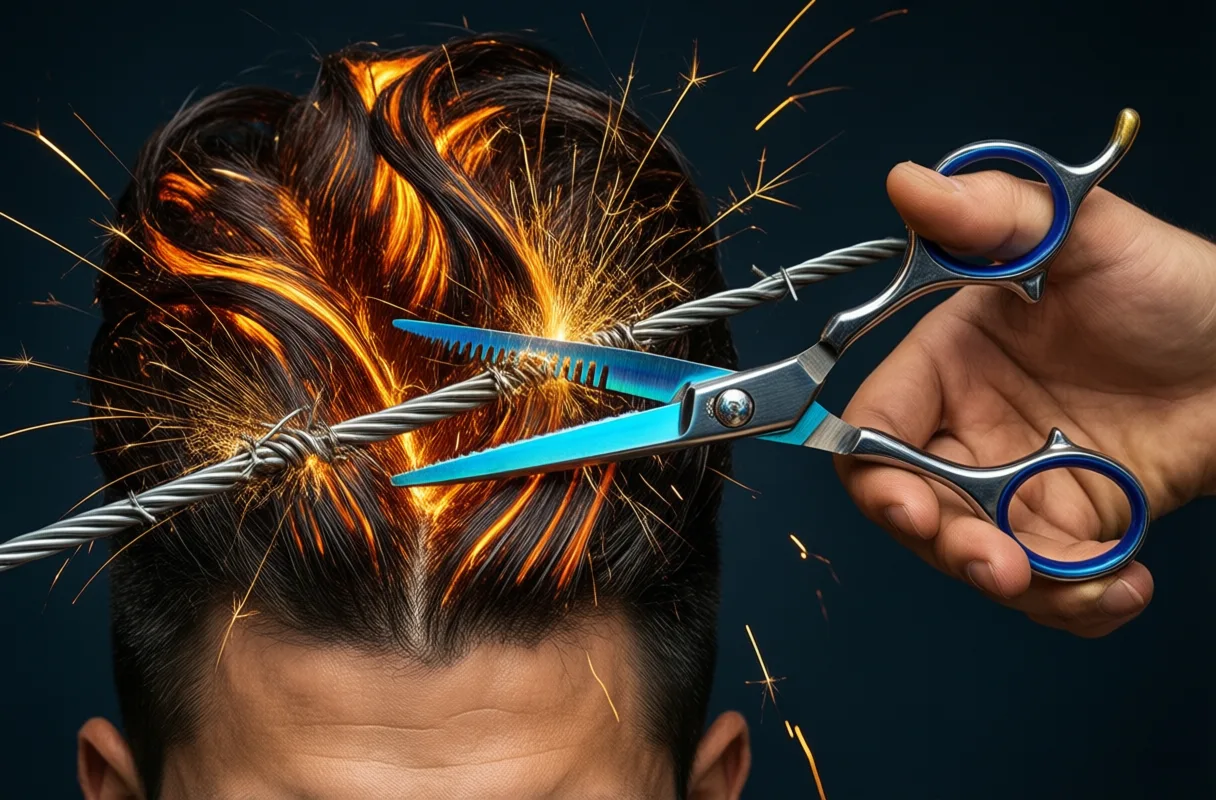
The Classic Taper: Timeless Versatility for Any Feature
The taper remains a cornerstone of men’s grooming for one reason: It adapts without sacrificing polish. Starting short at the nape and gradually increasing in length toward the crown, it follows the skull’s natural curve.
This cut works because it’s neutral-neither aggressive nor passive. It complements suits, hoodies, and everything in between. More importantly, it flatters multiple face shapes by controlling visual weight.
For oval and square faces, it refines without distraction. For round and heart shapes, it adds structure. Even rectangular types benefit when the taper stops mid-side, avoiding excess height.
It’s the haircut equivalent of deadlifts: unglamorous to some, essential to all. No flash, no fuss-just function meeting form.
- Clean lines at the neckline
- Gradual progression from short to longer
- Pairs with textured tops or simple side parts
Maintenance is minimal, growth is forgiving, and regrowth doesn’t scream “needs a barber.” That’s why it endures.
Short Hair, Big Impact: Cuts That Define Strong Jawlines
When your jaw is sharp, your haircut should honor it-not bury it. Short styles do more than convey toughness; they spotlight bone structure with surgical clarity.
Fades lead this category, especially when executed with precision. A low or mid fade removes distraction along the sides, letting the jaw and cheekbones dominate. Add a textured crop or brush-up on top, and you’ve got a look built for definition.
These cuts thrive on contrast. The starker the fade, the more the face stands out. But beware: too sharp a gradient can overwhelm softer features. For square and angular types, it’s armor. For rounder builds, use moderation.
Consider the crew cut: short everywhere, slightly longer on top. It’s military-grade practical, grows out cleanly, and emphasizes density over drama. Pair it with a lean face and you’ve got a look that says you train hard and waste no time.
Even the buzz cut has merit-if your proportions support it. It’s the ultimate test of facial balance. No hiding, no padding. Just you, as nature made you, refined by choice.
Softening the Angles: Styles That Complement Round and Heart Shapes
Round and heart-shaped faces benefit from movement, not rigidity. The goal isn’t to toughen-but to elongate, to guide the eye, to create flow.
Loose quiffs are ideal. They rise vertically without spreading wide, pulling focus upward. Use a matte paste for separation, not shine-texture breaks monotony, and randomness feels modern.
Textured fringes and side-swept styles also excel. A slightly messy forward fall reduces forehead prominence in heart shapes, while adding height to round ones. The illusion of length begins here.
Avoid anything too structured. Slick backs, tight fades, or center parts can emphasize circularity. Instead, Let asymmetry work for you. An off-center part changes the entire dynamic with zero effort.
These styles grow out gracefully, too. As they loosen, they gain character-not chaos. That’s the mark of a smart cut: it evolves with you, not against you.
When Length Works: Embracing Medium Styles for Balanced Symmetry
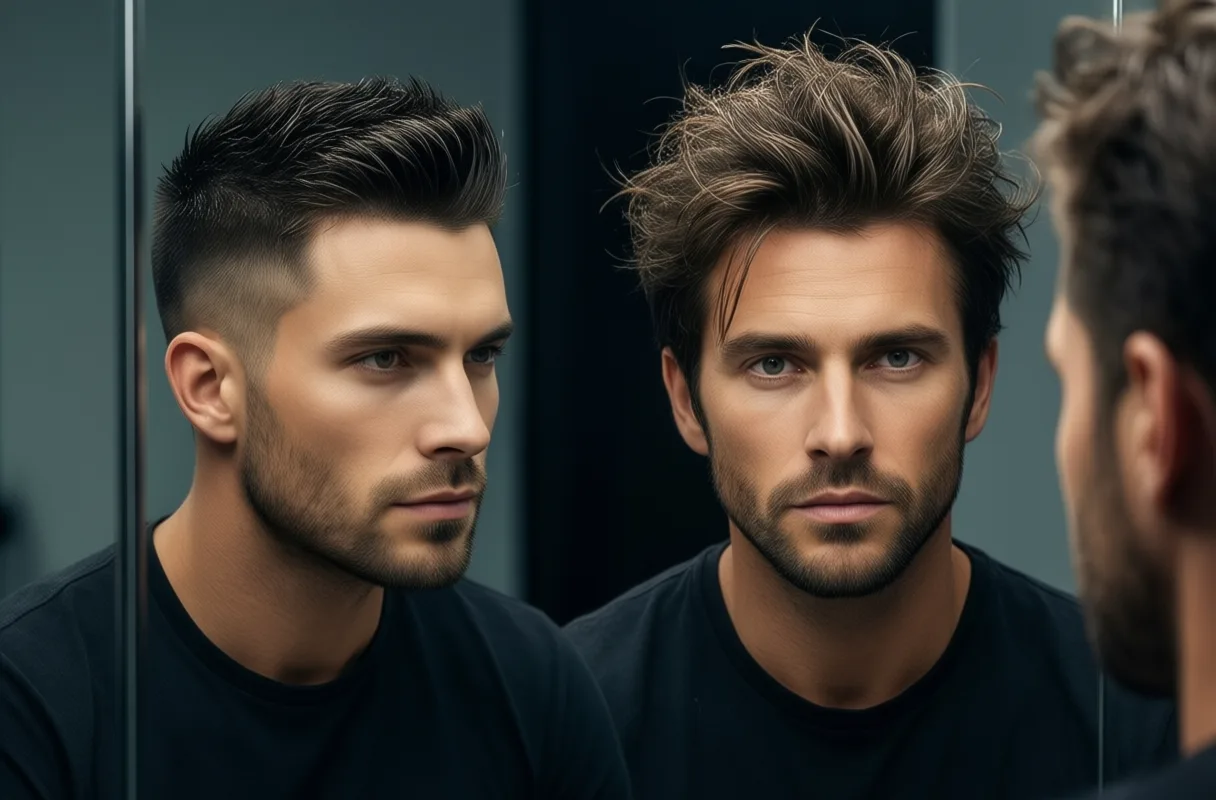
Length doesn’t mean laziness. For oval and rectangular faces, medium styles offer control over proportion without going short.
Mid-length layers add body without bulk. They move with you, responding to wind, sweat, and motion-ideal for active lifestyles. When styled correctly, they frame the face rather than obscure it.
Pompadours and modern mops fall here. They’re taller than wide, preserving vertical balance. A looser pompadour with natural texture avoids the vintage costume effect, fitting seamlessly into modern life.
These cuts demand a bit more upkeep. Daily product, occasional blow-drying, and regular trims keep them sharp. But for those willing to invest, the payoff is presence.
They also transition well. A quick finger comb takes you from gym to dinner. No re-styling, no panic. Just confidence rooted in preparation.
Beyond the Fade: Unique Textures and Personal Flair
Texture changes everything. Wavy, curly, or coarse hair isn’t a hurdle-it’s an asset, if respected.
Curly hair adds natural volume. Left unmanaged, it can widen a round face. But shaped properly-shorter sides, defined top-it becomes a signature. A curly fade with definition cream controls bounce while highlighting pattern.
Wavy hair offers movement without maintenance. It holds shape but flows naturally. Ideal for side parts and textured fringes, it bridges neat and effortless.
Straight, fine hair needs product to hold volume. Without it, it collapses-especially on humid days. A medium-taper with light fiber wax keeps it upright, giving the illusion of thickness.
Density matters, too. Thin hair benefits from shorter cuts that appear fuller. Long, thick hair can handle weight-but only if your face shape supports it.
Your hair’s biology isn’t a flaw. It’s data. Use it.
Debunking the One-Size-Fits-All Myth in Men’s Styling
Just because a celebrity wears a undercut doesn’t mean you should. Trends are designed for visibility, not universality.
Social media floods us with looks optimized for cameras, lighting, and stylists. What works in a photo may fail in daylight, under office fluorescents, or after a workout.
A great haircut must survive real life. It should look Good At hour eight, not just hour one. It should grow out with dignity, not demand weekly touch-ups.
That’s why trendy cuts often disappoint. They prioritize momentary impact over longevity. A fade that vanishes in two weeks isn’t style-it’s maintenance debt.
Choose based on your face, your hair, your routine. Not what’s viral. Real confidence comes from knowing your look was chosen-not copied.
What Barbers Know That You Don’t: Pro Tips for Long-Term Wearability
Barbers see thousands of faces. They know growth patterns, cowlicks, and how hair lies under stress and sweat.
One truth they repeat: Match your cut to your lifestyle. If you train daily, avoid styles that require blow-drying. If you work in client meetings, skip anything too edgy.
Growth direction matters. A part that fights your natural cowlick will fail by noon. Observe how your hair settles after a shower-then build from there.
Low-maintenance doesn’t mean boring. A classic taper or crew cut can be razor-sharp with zero daily effort. That’s efficiency.
Schedule trims every 3–5 weeks, depending on contrast. High fades need more frequent upkeep. Longer styles can stretch.
And never underestimate the line-up. A clean forehead edge elevates any cut instantly. It’s the detail that signals discipline.
Finding Your Signature: Matching Cuts to Confidence and Context
Your haircut should shift with your day-but not lose its identity. Boardroom to bar, gym to date night, it should adapt without apology.
A textured crop works universally. It’s neat enough for presentations, rugged enough for weekends. Add a matte product, and it gains edge.
For formal settings, a side part with low fade projects authority. It’s classic, not conservative. Paired with a sharp jaw and lean face, it commands space.
Weekend ease favors looseness. A tousled top with faded sides feels lived-in, not lazy. It says you look this good without trying-because you planned it that way.
Your signature isn’t one style. It’s a range, centered on You. Consistency builds recognition. People remember how you present yourself-down to the hair.
The Final Detail: How Parting and Sideshape Adjust the Illusion
A part isn’t just habit-it’s geometry. A center part can elongate a face; an off-center one adds asymmetry, breaking monotony.
Shift your part slightly to change the balance. Move it left or right to minimize a wider cheek or broader forehead. Small tweak, big effect.
Sideshape-the curve where side meets back-also influences perception. A sharp arc draws attention inward; a soft blend feels organic. Match it to your style: crisp for formal, fluid for casual.
Even temple fading matters. A low fade keeps volume near the ear, softening angles. A high fade exposes skin, amplifying contrast.
These aren’t details for barbers alone. They’re tools. Use them to refine, not reinvent. Because in the end, the best men’s haircuts don’t shout-they settle.
| Face Shape | Best Cuts | Key Styling Tips |
|---|---|---|
| Oval | Fade variations, pompadours, textured crops | Avoid too much volume or flat tops; stick to proportion |
| Round | High fade with quiff, side parts | Add height on top; avoid bulk at the sides |
| Square | Tight fades, short crops, tapers | Use moderate volume; focus on jawline, not width |
| Heart | Textured crop, fringe, side-swept layers | Reduce forehead exposure; shift weight downward |
| Rectangular | Medium fade, soft pompadour, modern mop | Add width to middle; avoid high-volume styles |
| All Shapes | Classic taper | Gradual length change; clean neckline; low maintenance |
Finding the Right Cut Starts With Your Face
Haircuts aren’t one-size-fits-all-your face shape plays a big role in which styles will look most balanced. For instance, guys with round faces often find that adding height on top helps lengthen the appearance of their face, while those with longer faces might go for textured crops or side parts to add width. It’s less about following every trend and more about choosing a cut that complements your natural features.
Little-Known Facts That Shape Your Style
The pompadour isn’t just a throwback to 1950s rockabilly-it’s had a modern revival thanks to its versatility. With shorter sides and volume swept upward from the forehead, it works surprisingly well for oval and square face shapes by emphasizing strong jawlines. Meanwhile, the crew cut has military roots but became mainstream in the mid-20th century because of how low-maintenance and clean-cut it looks, especially on men with angular features.
Undercuts have surged in popularity over the last decade, not just for style but function-athletes and active guys love them because they keep the neck cool while maintaining a bold look up top. And here’s a fun twist: the fade isn’t a new invention. Barbers have been tapering hair close to the scalp for over a century, long before it became a staple in urban streetwear and hip-hop culture. Today’s variations-low, mid, high-let you control how dramatic the contrast feels, making it adaptable for everything from office settings to weekend outings. Explore more stories, videos, and creators on Loaded.
Frequently Asked Questions
What is the best haircut for a round face?
The best haircut for a round face adds height on top and keeps the sides tight to create vertical lift. Styles like a high fade with a textured quiff or side parts help elongate the face and break circular symmetry.
How do I choose a haircut for my face shape?
Identify your face shape by observing width, length, and jawline. Then select a cut that balances proportions-add volume where needed and use contrast in length and texture to enhance natural structure.
Which men's haircut works for all face shapes?
The classic taper is versatile and flatters multiple face shapes by following the skull’s natural curve. It offers clean lines, gradual progression from short to longer, and pairs well with various top styles.
Why should I consider my hair texture when choosing a cut?
Hair texture affects how a style holds and appears. Curly hair adds volume and benefits from shorter sides; wavy hair works well with side parts; straight, fine hair needs product to maintain volume and avoid flatness.
This article was produced with AI assistance. How Chiseled Magazine uses AI.
Jin-ho examines how fitness integrates into daily life and evaluates performance gear with a critical eye. He investigates recovery tools, wearable tech, and routines that bridge gym gains with real-world resilience, always prioritizing function over hype.