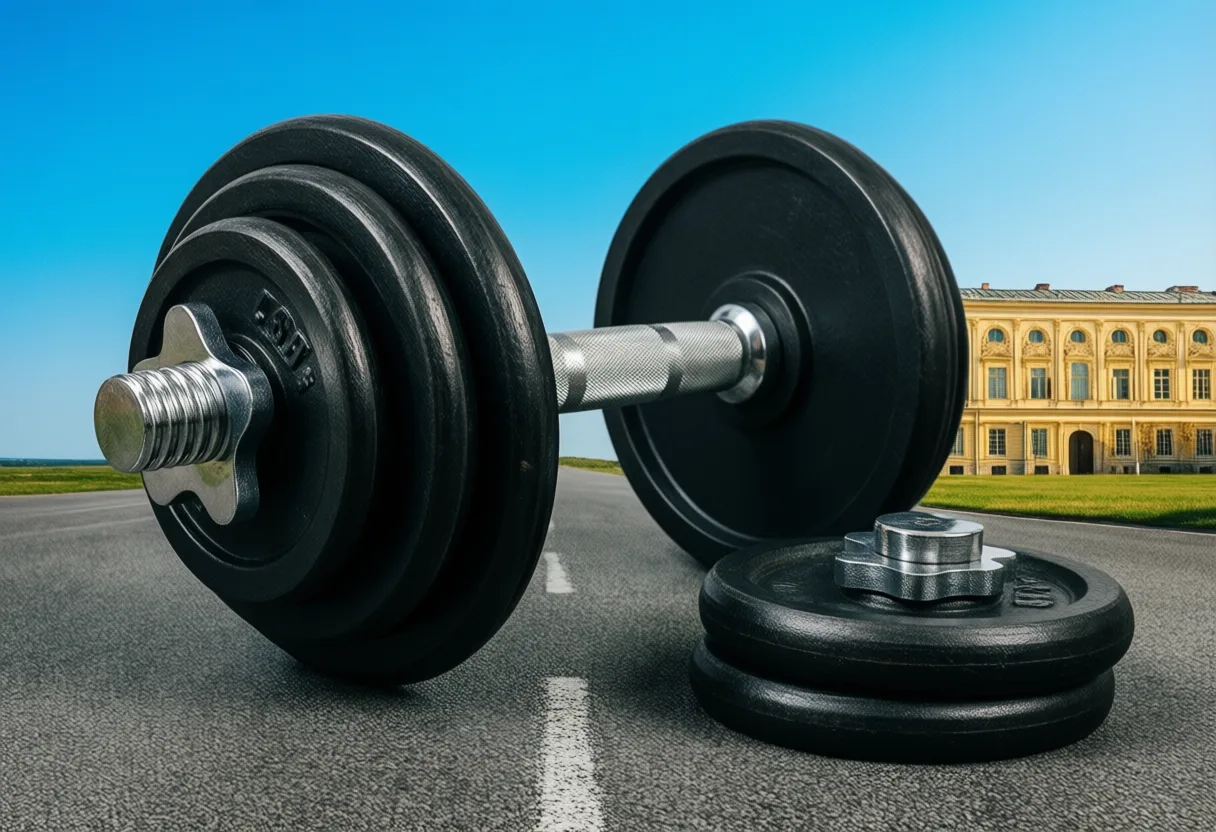
Your chest isn’t just a showpiece-it’s the foundation of upper-body power, posture, and functional strength. Whether you're pushing open a heavy door or hoisting your body up from the floor, your pectorals are at work. And when it comes to Building stronger, fuller pecs at home or in the gym, Dumbbells offer unmatched versatility-no fancy machines required.
Why Dumbbells Are the Ultimate Tool for Pec Development
Dumbbells let each arm move independently, forcing Weaker muscles To catch up and correcting imbalances over time. Unlike barbells, which lock your hands into a fixed position, dumbbells allow natural movement arcs that align with how your shoulders actually function. This freedom reduces joint strain while maximizing muscle fiber recruitment across all regions of the chest.
They’re also space-efficient and scalable. You don’t need a full rack-just a pair and a bench-to perform movements that rival any cable crossover or machine press. Whether you're training for size, strength, or symmetry, Dumbbells deliver Real-world results Without gimmicks.
And because they require more stabilization, dumbbell exercises engage not just the pecs but also the core, shoulders, and triceps. That means every rep builds not only mass but coordination and control-two things often missing in cookie-cutter chest routines.
How This Guide Covers Every Angle of Dumbbell Chest Training
This isn’t a list of random presses thrown together. We’ve mapped out Every major dumbbell chest exercise Based on biomechanics, range of motion, and muscle activation patterns. From flat to incline, decline to fly variations, standing to unstable surfaces-we cover what each movement uniquely contributes to chest development.
You’ll learn why grip matters, how angle shifts target different fibers, and where common form errors sabotage progress. No fluff, no bro-science-just practical insights grounded in real training principles.
We also integrate programming tips so you know how to combine these moves effectively. Because doing every exercise haphazardly won’t build a better chest. But smart selection, proper volume, and Progressive overload? That’s the formula.
The Full Range of Dumbbell Chest Movements You Should Know
A complete chest routine doesn’t rely on one or two favorite lifts. It uses a strategic mix of compound presses and isolation flyes across multiple planes of motion. Your pectoralis major has both clavicular (upper), sternal (middle), and costal (lower) heads-each responds best to specific angles and tensions.
By rotating through different positions-flat, inclined, declined-you ensure balanced growth and avoid plateauing. Adding unilateral and unstable variations further enhances neuromuscular engagement.
Here are the key dumbbell chest movements backed by consistent inclusion Across expert Sources:
- Dumbbell Bench Press
- Incline Dumbbell Press
- Decline Dumbbell Press
- Dumbbell Chest Fly
- Incline Dumbbell Fly
- Dumbbell Push-Up
- Neutral Grip Dumbbell Press
- Half-Bench Dumbbell Fly
- Standing Chest Fly
- Alternating Reverse Grip Chest Press
- Exercise Ball Dumbbell Bench Press
Each serves a distinct purpose. Some build raw strength, others deepen stretch or improve definition. Together, they form a comprehensive system for total pec development.
What Makes Each Exercise Unique for Pectoral Growth
Not all chest exercises are created equal-even if they look similar. Small changes in body position, hand orientation, or equipment setup dramatically shift muscle emphasis and joint stress. Understanding these differences helps you choose the right tool for the job.
For example, pressing on an exercise ball increases instability, turning a basic press into a full-core challenge. Meanwhile, standing flyes force anti-rotation control, linking chest work directly to trunk stability.
Grip width and palm direction also matter. A neutral grip reduces shoulder impingement risk, making it ideal for lifters with joint sensitivity. An alternating reverse grip introduces asymmetry, improving mind-muscle connection on the lagging side.
Below, we break down exactly what each movement brings to the table-and how to use it wisely.
1. Dumbbell Bench Press: The Foundation of Chest Strength
The dumbbell bench press is the cornerstone of any serious chest program. Lying flat on a bench, you press two dumbbells upward in a controlled arc, allowing greater range than a barbell. This extended motion increases time under tension and activates more muscle fibers.
It targets the middle portion of the pectoralis major while engaging the anterior deltoids and triceps as synergists. Because each arm works independently, imbalances are exposed and corrected over time.
Most programs recommend 3 to 4 sets of 6 to 10 repetitions at moderate intensity. This rep range balances mechanical load with metabolic stress-ideal for hypertrophy. Rest 60–90 seconds between sets to maintain training density.
Use this lift early in your workout when energy levels are highest. Pair it with Dumbbell Tricep exercises For Building strength And Size later in the session to maximize upper-body synergy.
2. Incline Dumbbell Press: Targeting the Upper Chest Fibers
If you want a lifted, full-looking chest, the upper pecs must be developed. The incline dumbbell press does exactly that-shifting emphasis toward the clavicular head of the pectoralis major. Set the bench at a 30–45 degree angle for optimal targeting.
Pressing from this position mimics the mechanics of pushing something overhead, recruiting more front delts while still loading the chest. It’s especially useful for athletes and lifters looking to improve pressing power in sports or compound lifts.
Because the range is slightly shorter than flat pressing, focus on Controlled eccentric phases-lower the weights slowly to maximize stretch and activation. Keep your elbows tucked around 45 degrees to protect the shoulders.
This movement pairs well with flat pressing in a weekly split. Try it on “push” days or alternate weeks depending on recovery needs.
3. Decline Dumbbell Press: Emphasizing the Lower Pec Region
Though less commonly trained, the lower chest plays a crucial role in creating that coveted "shelf" look beneath the nipple line. The decline dumbbell press isolates this area by reversing the incline angle-bench set downward at about 15–30 degrees.
With your torso tilted, gravity pulls the resistance toward the sternal origin of the pecs, increasing fiber recruitment in the lower fibers. It also reduces anterior deltoid involvement compared to flat or incline presses.
Be cautious with range here-going too deep can compress the shoulder joint. Stop when your upper arms are slightly below parallel to the floor.
While not essential for beginners, advanced lifters should include this variation periodically to round out chest development and break plateaus.
4. Dumbbell Chest Fly: Isolation for Maximum Stretch and Pump
Flyes aren’t about moving heavy weight-they’re about feeling the muscle stretch and contract. The dumbbell chest fly isolates the pecs by eliminating triceps assistance, focusing purely on horizontal adduction.
Lie flat, arms extended above the chest with a slight bend in the elbows. Open wide in a hugging motion until you feel a deep stretch across the chest, then sweep back up with control. Imagine squeezing a beach ball at the top.
This movement delivers an intense pump and improves flexibility in tight pecs-a common issue among desk workers. Use lighter weights and higher reps: 10–15 per set.
Avoid bouncing at the bottom or using momentum. If you’re swinging, the weight is too heavy. For added detail, follow this with Dumbbell Leg Exercises : 10 Fast Methods For Insane results ! To balance your physique.
5. Incline Dumbbell Fly: Building Upper Chest Definition
Just like the incline press, the incline fly zeroes in on the upper chest-but with even less triceps contribution. Performed at a 30–45 degree bench angle, it stretches the clavicular head while promoting aesthetic separation near the collarbones.
Because the leverage is reduced on an incline, expect to use significantly lighter dumbbells than in flat flyes. That’s normal. The goal is precision, not ego lifting.
Keep wrists neutral and lead with the pinky finger during contraction to prevent shoulder strain. Control the negative phase-four seconds down, one second squeeze at the top.
Include this after heavier pressing movements when the pecs are already warm but still fresh enough to respond to isolation.
6. Dumbbell Push-Up: Bodyweight Meets Load for Functional Power
Take the classic push-up and elevate it-literally-by placing your hands on dumbbells. This small tweak increases range of motion at the bottom of the rep, allowing deeper chest expansion.
Plus, gripping handles instead of the floor boosts wrist comfort and allows natural forearm rotation. The instability also challenges core stability and shoulder control.
You can add resistance via a weighted vest or reduce difficulty by elevating your hands. Advanced versions include explosive pushes or single-arm variations.
It’s a minimalist powerhouse-effective for home workouts, travel, or active recovery days. And unlike machine-based options, it trains pushing strength in a functional, ground-based pattern.
7. Neutral Grip Dumbbell Press: Joint-Friendly Chest Activation
Also known as the neutral or hammer grip press, this version keeps palms facing each other throughout the movement. It reduces stress on the rotator cuff and AC joint, making it ideal for lifters with shoulder discomfort.
Despite the safer mechanics, it still activates the entire chest, particularly the inner and lower portions. The neutral grip may limit maximal load compared to traditional pressing, but the trade-off is longevity.
Think of it as preventive maintenance-building strength without sacrificing joint health. Great for high-frequency training or rehab transitions.
Swap it in when flat or incline pressing causes pain. Many find they can train harder over time by protecting their shoulders first.
8. Half-Bench Dumbbell Fly: A Hybrid Move for Enhanced Range
This lesser-known variation blends elements of floor flyes and bench work. Sit on the edge of a bench, lie back partially so only your upper back is supported, letting the dumbbells hang straight up.
From there, perform flyes with a deep stretch-often exceeding what’s possible on a full bench. The unsupported torso increases demand on the core and lats for stabilization.
It’s excellent for lifters who struggle to feel flyes in their chest. The altered angle places the scapulae in a more retracted position, enhancing pec engagement.
Use moderate weight and strict tempo. This isn’t a mass-builder, but a refinement tool-one that sharpens neuromuscular connection.
9. Standing Chest Fly: Engaging Core and Chest Together
Performing chest flyes while standing transforms them into a full-body movement. Without bench support, your core must resist forward flexion and lateral sway as you move the weights.
This anti-flexion demand links chest training directly to trunk strength-an overlooked benefit in most isolation work. It’s also highly practical; real-life pushing rarely happens lying down.
Use light-to-moderate dumbbells and focus on bracing your abs hard throughout. Slight knee bend improves balance. Move slowly-rushing leads to cheating.
Best used at the end of a workout for burnout or as part of a circuit. Not ideal for heavy loading, but valuable for integration.
10. Alternating Reverse Grip Chest Press: Unilateral Focus with Twist
One arm uses a standard overhand grip, the other a reverse (underhand) grip. Alternating sides creates asymmetrical tension, challenging coordination and deepening unilateral awareness.
The reverse grip shifts emphasis toward the lower chest and reduces anterior shoulder strain. It also increases biceps involvement slightly, which some may find beneficial-or distracting.
Go light at first. The novelty alone will fatigue your nervous system quickly. Use it to expose weaknesses, not chase PRs.
Consider this a diagnostic tool as much as a builder. If one side struggles more, you’ve found an imbalance worth addressing.
11. Exercise Ball Dumbbell Bench Press: Instability for Core Integration
Replace the bench with an exercise ball and instantly upgrade the difficulty. Your body must stabilize in three dimensions, activating the abs, obliques, and lower back alongside the chest.
This instability limits how much weight you can press-but that’s the point. You’re trading load for control, building resilient strength rather than sheer power.
It’s also gentler on the spine due to the curved surface, which encourages thoracic extension. Just ensure the ball is properly inflated and positioned so your hips don’t sag.
Use this variation early in a phase focused on motor control or after injury return. It primes the body for heavier pressing down the line.
Common Misconceptions About Dumbbell Chest Training
Many lifters assume that barbell movements are inherently superior for building mass. But research and practice show that dumbbells often produce comparable or better muscle activation-with fewer injuries. The idea that “heavy equals effective” ignores the importance of range of motion and joint safety.
Another myth: flyes are just for pump work. While they don’t handle massive loads, they provide unique tension profiles that stimulate growth in ways pressing cannot. Horizontal adduction is a primary function of the pecs-so neglecting flyes means leaving gains on the table.
Some believe angle changes don’t matter much. Yet studies consistently show that incline work preferentially activates the upper chest, while decline focuses on the lower region. Skipping either leads to incomplete development.
Finally, people underestimate unilateral training. Doing both arms at once feels efficient, but it lets strong sides dominate. Dumbbells fix that by enforcing equal effort-critical for long-term symmetry.
Why Some Lifters Underestimate the Role of Angle and Grip
Ego gets in the way. Most want to pile on plates and impress others, not adjust bench angles or experiment with grips. But subtle tweaks-like switching from flat to incline or adopting a neutral hold-can unlock new growth without adding weight.
Shoulder anatomy varies widely between individuals. What feels smooth for one lifter may pinch or grind for another. Yet many stick to rigid protocols instead of adapting to their bodies.
The truth? There’s no universal “best” chest exercise. Only what works best for You-based on structure, mobility, and goals. A smarter approach embraces variety, not dogma.
Ignoring grip and angle means training blindfolded. You might make progress, but it’ll be uneven and unsustainable. Master the variables, and you master results.

Practical Tips for Programming These Exercises Effectively
Start with one primary compound movement per session-like the dumbbell bench press or incline press-performed first when you’re strongest. Aim for 3 to 4 sets of 6 to 10 reps using a weight that leaves 1–2 reps in reserve (RPE 7–8).
Follow with 1–2 accessory movements: a fly variation, a unilateral press, or an unstable press. These typically use higher reps-10 to 15-for metabolic stress and pump.
Limit direct chest training to 2 sessions per week. More isn’t better; recovery matters. Space sessions 72 hours apart if possible, especially when including heavy pressing.
Track progress not just by weight lifted, but by improved control, deeper stretch, and cleaner form. Muscle growth follows consistency, not heroics.
How to Structure Sets, Reps, and Progression for Real Gains
Stick to proven rep zones:
- Strength: 4–6 reps with heavier loads
- Hypertrophy: 6–12 reps (sweet spot for muscle growth)
- Endurance/Pump: 12–20 reps with lighter weights
Progressive overload doesn’t always mean more weight. You can progress by:
- Increasing reps within the target range
- Improving time under tension (slower eccentrics)
- Reducing rest intervals
- Enhancing technique and mind-muscle connection
Don’t change everything at once. Pick one variable to improve each week. Small wins compound.
Deload every 4–6 weeks. Step back briefly to leap forward. Reduce volume by 40%, keep form sharp, then ramp up again.
Putting It All Together: Building a Smarter Chest Routine
Design your chest day like a pyramid: base = heavy compound, mid-layer = hypertrophy-focused press or fly, top = isolation or functional variation.
Example Session:
1. Dumbbell Bench Press – 4 x 8
2. Incline Dumbbell Fly – 3 x 12
3. Dumbbell Push-Up – 3 x max reps
4. Standing Chest Fly – 2 x 15
Rotate incline and decline pressing weekly. Swap in neutral grip or half-bench flyes every few weeks to refresh stimulus.
Train chest twice weekly if recovering well. Otherwise, once with full effort suffices. Pair with shoulders or triceps-or go full-body.
Remember: aesthetics follow function. A powerful chest isn’t just for looks. It’s for pushing, pulling, lifting, and living stronger. Build it wisely.
| Exercise | Primary Target | Key Benefit |
|---|---|---|
| Dumbbell Bench Press | Middle pectorals | Foundational strength with full range of motion |
| Incline Dumbbell Press | Upper chest | Enhances pressing power and chest lift |
| Decline Dumbbell Press | Lower chest | Builds shelf-like appearance below nipple line |
| Dumbbell Chest Fly | Full chest stretch | Isolates pecs with maximum horizontal adduction |
| Incline Dumbbell Fly | Upper chest definition | Promotes collarbone separation with light load |
| Dumbbell Push-Up | Functional chest power | Increases range of motion and core stability |
| Neutral Grip Dumbbell Press | Joint-friendly activation | Reduces shoulder strain, ideal for sensitive lifters |
| Standing Chest Fly | Chest and core integration | Trains real-world pushing with anti-flexion demand |
Power Up Your Pecs: Dumbbell Chest Moves That Work
Why Dumbbells Dominate Chest Day
Dumbbells give your chest a serious edge because they force each side to work independently. That means no cheating by letting one arm do more than the other. From the classic Dumbbell bench press To variations like Incline And Decline presses, these moves hit every fiber of your pectorals. Even tweaking your grip-like going for a Neutral grip-can shift the focus and give lagging muscles a new challenge. The Dumbbell chest fly Is another favorite, opening up the pecs with a controlled stretch you just can’t get with a barbell.
Fly Into This Fun Detail
Here’s something cool: performing a Fly-to press Combines two moves in one motion-starting with a wide fly and finishing in a press-which ramps up muscle engagement. People have even taken the classic press off the bench entirely, trying it from a Half-bench Or even an Exercise ball, which adds an instability factor that fires up your core while you build chest strength. And if you're short on time or equipment, the Dumbbell push-up Packs a punch-place one dumbbell under each hand, and you’ve got an elevated range of motion with added resistance.
A Move That Stands Out
Not every chest builder needs a bench. The Standing chest fly Uses dumbbells while you’re on your feet, recruiting your core and improving stability. Another underrated gem? The Svend press, where you press two dumbbells together at chest level without locking out-constant tension, zero rest. Whether you’re aiming for mass, strength, or just a well-rounded push, mixing up angles and equipment keeps your chest guessing-and growing.
Frequently Asked Questions
What are the benefits of using dumbbells for chest exercises?
Dumbbells allow each arm to move independently, correcting muscle imbalances and reducing joint strain. They enable natural movement arcs, increase muscle fiber recruitment, and engage the core, shoulders, and triceps for greater coordination and control.
Which dumbbell chest exercise targets the upper chest?
The incline dumbbell press targets the clavicular head of the pectoralis major, helping develop the upper chest. It is performed with the bench set at a 30–45 degree angle to emphasize upper pec fibers.
How can I reduce shoulder strain during chest presses?
Using a neutral grip during dumbbell presses reduces stress on the rotator cuff and AC joint. This grip, with palms facing each other, is ideal for lifters with shoulder discomfort and supports joint-friendly training.
What is the purpose of fly exercises in a chest routine?
Dumbbell flyes isolate the pecs through horizontal adduction, eliminating triceps assistance. They enhance stretch, improve flexibility, and provide unique tension that complements pressing movements for full chest development.
This article was produced with AI assistance. How Chiseled Magazine uses AI.
Jin-ho examines how fitness integrates into daily life and evaluates performance gear with a critical eye. He investigates recovery tools, wearable tech, and routines that bridge gym gains with real-world resilience, always prioritizing function over hype.