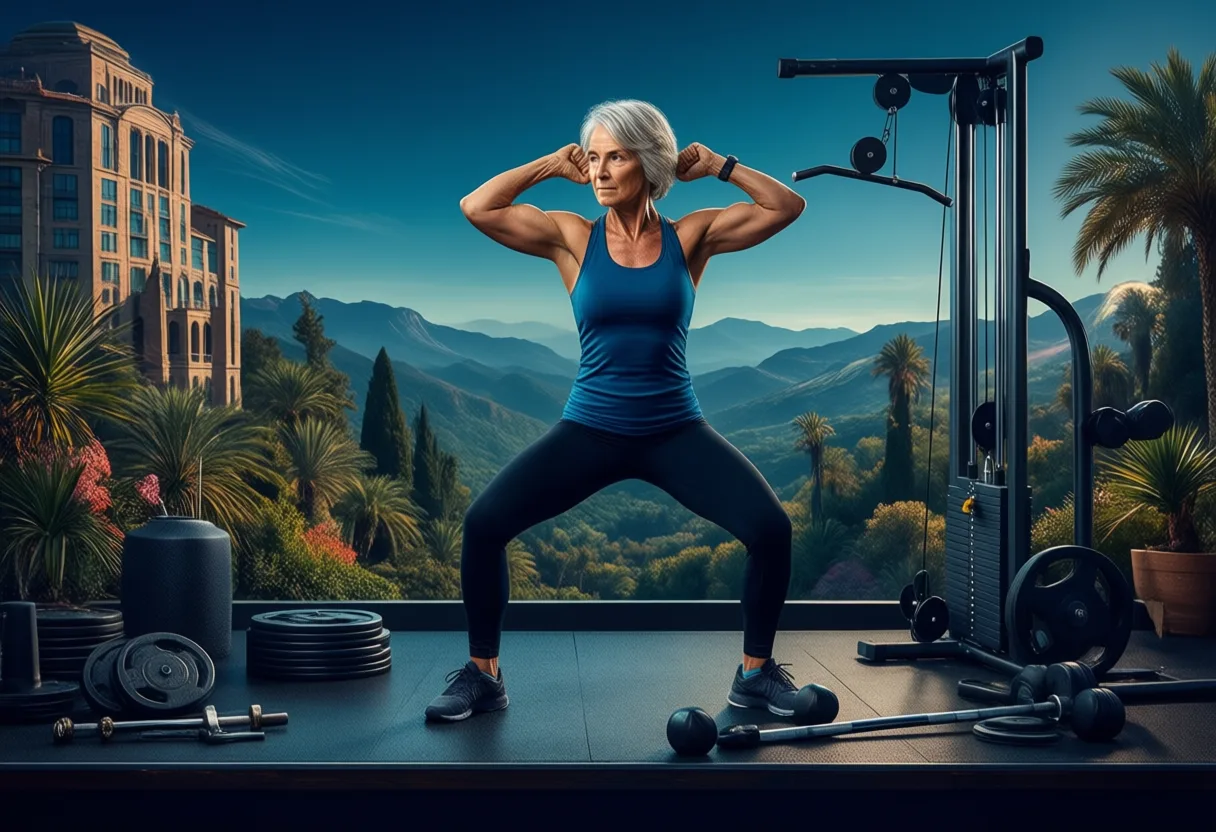
Aging doesn’t have to mean slowing down. In fact, the women who stay strong after 60 often move with more purpose than they did at 40. It’s not about lifting the heaviest weights-it’s about reclaiming control, one deliberate movement at a time.
Why Strength Matters More as You Age
H3: Muscle Isn’t Just for Movement-It’s for Living
Every step you take, every grocery bag you carry, every time you rise from a chair, you’re relying on muscle. As we age, muscle mass naturally declines-a process called sarcopenia-but that doesn’t mean it’s inevitable. Strength isn’t just about looking capable; it’s about Being Capable. Maintaining muscle helps Preserve independence, reducing reliance on others for daily tasks.
Think of muscle as your body’s insurance policy. The more you have, the better equipped you are to handle life’s physical demands. From climbing stairs to lifting a suitcase, Functional strength Keeps you engaged in the world. And contrary to outdated myths, building strength after 60 isn’t risky-it’s essential.
The Hidden Link Between Muscle and Independence
Losing strength doesn’t just make life harder-it can quietly shrink your world. Reduced muscle leads to slower movement, less confidence on uneven ground, and a higher chance of injury. But research consistently shows that Strength training reverses these trends, improving mobility and reducing fall risk. The body adapts at any age-you just have to ask it to.
Staying strong means staying free. You’re not training to win a competition-you’re training to live on your terms. Whether it’s playing with grandchildren or traveling without fear of fatigue, muscle is the foundation. And the best part? You don’t need a gym membership or fancy equipment to start.
What Balance Really Means After 60
H3: It’s Not Just About Not Falling
Balance isn’t just a physical skill-it’s a blend of muscle control, coordination, and confidence. After 60, small imbalances in strength or posture can lead to missteps, but these aren’t signs of weakness. They’re signals that your body needs attention, not surrender. True balance comes from Stability In the core, hips, and ankles-all trainable areas.
We often think of balance as standing on one foot, but it’s really about control during motion. Walking on a sidewalk, turning quickly, or stepping off a curb-all require micro-adjustments that strong muscles make easier. And when those muscles are conditioned, your brain trusts your body more. That trust is where confidence begins.
How Confidence Grows from Physical Control
There’s a quiet pride that comes from knowing your body can handle what life throws at it. When you can stand up without using your arms, carry your own bags, or walk a trail without fear, something shifts. You feel capable. You feel present. Confidence isn’t faked-it’s earned through consistent, small victories.
Every time you complete a set of chair squats or hold a march in place, you’re reinforcing that belief. It’s not about intensity; it’s about showing up. And the more you move with purpose, the more your self-image evolves-from “I should be careful” to “I’ve got this.”
7 Foundational Exercises to Build Stability And Strength
H3: 1. Chair Squats: Building Lower Body Power Safely
Start seated in a sturdy chair, feet flat on the floor. Lean slightly forward and rise to standing, then lower back down with control. This movement builds quadriceps, glutes, and confidence in your ability to stand independently. It mimics one of the most essential daily actions-getting up from a seat.
Do 2–3 sets of 10–12 reps, focusing on smooth motion. As it gets easier, slow the descent to increase difficulty. This isn’t just an Exercise-it’s practice for real life. For more ways to build functional lower-body strength, check out the Farmer Carry: Top 5 Benefits for Strength Training.
Wall Push-Ups: Upper Body Strength Without Strain
Stand facing a wall, arms extended at shoulder height. Lean in and press your palms into the wall, then bend your elbows to bring your chest close, then push back. This builds chest, shoulders, and triceps with minimal joint stress. It’s a safe, scalable way to maintain upper-body strength.
Do 2–3 sets of 10–15 reps. As you gain strength, move your feet farther from the wall to increase resistance. This movement supports everything from pushing open doors to lifting objects overhead. It’s subtle, but powerful.
Heel-to-Toe Walk: Sharpening Everyday Balance
Walk in a straight line, placing the heel of one foot directly in front of the toes of the other. Take 10–20 steps with arms out for balance. This challenges your coordination and mimics the narrow base of support needed for stability. It’s a simple test-and trainer-of real-world balance.
Practice this daily, even for just a minute. Over time, your body learns to adjust more quickly to uneven surfaces. This isn’t just about walking straight-it’s about moving with control and awareness.
Standing Marches: Boosting Coordination and Core Awareness
Stand tall and lift one knee, then the other, alternating like marching. Hold onto a counter or chair if needed. This activates the core, hip flexors, and improves balance during movement. It’s a low-impact way to build dynamic stability.
Do 20–30 seconds at a time, focusing on posture. As you improve, try it without support. This movement translates directly to climbing stairs and navigating crowded spaces.
Side-Lying Leg Lifts: Strengthening Hips for Steady Steps
Lie on your side, legs stacked. Lift the top leg slowly, then lower with control. Repeat 10–15 times per side. This targets the gluteus medius, a key muscle for pelvic stability. Weak hips often lead to wobbly steps-this exercise helps correct that.
Do 2–3 sets per side. Over time, you’ll notice better control when walking or standing on one leg. It’s a quiet powerhouse move that pays big dividends.
Seated Rows with Resistance Band: Enhancing Posture and Back Strength
Sit with legs extended, loop a resistance band around your feet, and pull the ends toward your torso, squeezing shoulder blades. This strengthens the upper back and counters slouching. Good posture isn’t just about looks-it reduces strain on joints and nerves.
Use light to medium resistance and focus on form. Do 2–3 sets of 12–15 reps. This movement supports everything from breathing to balance.
Calf Raises: Improving Ankle Stability to Prevent Falls
Stand with feet hip-width apart, hold a chair if needed, and rise onto your toes, then lower slowly. This strengthens calves and improves ankle control. Strong calves help absorb impact and stabilize every step.
Do 2–3 sets of 15–20 reps. As it gets easier, try it on one leg at a time. This small move has an outsized impact on fall prevention.
Common Misconceptions That Hold Women Back
H3: “I’m Too Old to Start Now”
This myth keeps more women from strength training than any medical condition. The truth? It’s never too late to build strength. Studies show measurable gains in muscle and balance within weeks, even for those starting in their 70s and 80s. Age isn’t a barrier-mindset is.
Many assume that joint pain or past injuries mean they should avoid resistance work. But when done safely, strength training often reduces discomfort by improving joint support. The body adapts to what you ask of it-start small, and it will respond.
Why “Taking It Easy” Can Do More Harm Than Good
Rest isn’t always recovery. A life without physical challenge leads to stiffness, weakness, and a slow erosion of confidence. Avoiding effort to stay safe can actually make you more vulnerable. Muscles weaken without use, balance declines, and fear of falling becomes a self-fulfilling prophecy.
The goal isn’t to push to exhaustion-it’s to stay engaged. Movement is medicine. And the right kind of effort doesn’t wear you down; it builds you up.
How to Start Without Overdoing It
H3: Simple Safety Tips and Smart Progression Strategies
Begin with two days per week, focusing on form over speed or reps. Use chairs, walls, or counters for support-there’s no shame in stability. Consistency beats intensity every time. Even 10 minutes a day can lead to real change.
Warm up with light walking or arm circles. Move slowly, breathe steadily, and stop if you feel pain (not to be confused with normal muscle fatigue). Hydrate well and listen to your body-it knows more than you think.
Track Progress, Not Perfection
Use a simple notebook or app to log your reps and how you felt. Did you need less support this week? Did you complete more reps? Small improvements are still improvements. Celebrate them.
Gradually increase reps, then resistance. Try one new variation per week-like marching without support or adding a light band to rows. For more ideas on building strength progressively, explore Tricep Workouts Dumbbells The 8 Best Exercises For Strength and Dumbbell Tricep Exercises for Building Strength and Size.
Small Gains, Big Changes: What to Expect Over Time
H3: What to Expect Over Time
Within a few weeks, you’ll likely notice easier movement-standing up, walking, carrying items. Balance improves subtly, like not needing to grab a railing on stairs. Confidence grows not from dramatic change, but from repeated proof that your body can do more than you thought.
After a couple of months, muscle tone becomes more visible, posture improves, and fatigue decreases. You’re not chasing a magazine cover-you’re building a body that serves you. And that’s a form of strength no one can take away.
Why Consistency Outweighs Intensity Every Time
You don’t need to train like a pro athlete to benefit. Five minutes a day with purpose beats an hour once a month. The women who thrive aren’t the strongest on day one-they’re the ones who keep showing up. Strength Training Exercises for senior women work because they’re repeatable, measurable, and adaptable.
Whether you’re inspired by the resilience of Turkish Women Inspiring Strength And Resilience In Society or the effortless strength of Swedish Women Who Redefine Strength And Style Today, remember: power isn’t about age. It’s about action. And the best time to start? Now. For more motivation, check out Vinny Paz’s Insane 5 Training Secrets for Unbeatable Strength! And Brachioradialis: 10 Insane Exercises for Rapid Strength Gain!.

Building Strength, One Step at a Time
The Power of Simple Movements
Did you know that something as basic as standing up from a chair can be a strength-building exercise? For senior women, practicing sit-to-stands strengthens the legs and improves balance, making daily tasks easier and reducing the risk of falls. It’s not about lifting heavy weights; it’s about moving with control. Adding a pair of light hand weights during arm curls or shoulder presses can boost bone density over time, which is especially important as we age.
Balance Isn’t Just for Yoga
Many people think balance comes naturally, but it’s actually a skill you can train-just like building muscle. Simple moves like standing on one foot while brushing your teeth or walking heel-to-toe down a hallway help sharpen coordination and stability. These small habits add up, making it easier to stay steady on icy sidewalks or uneven pavement. Even low-impact exercises like seated leg lifts or wall push-ups engage core muscles that support posture and confidence.
Strength That Shows Up in Everyday Life
When you build strength, the benefits show up in surprising ways. Carrying groceries, getting out of the car, or playing with grandchildren becomes less tiring and more enjoyable. Studies show consistent strength training can improve sleep quality and boost mood, thanks to the release of endorphins. And here’s a fun fact: muscle tissue burns more calories at rest than fat, so building a little more muscle can help maintain a healthy metabolism, even as activity levels change. Explore more stories, videos, and creators on Loaded.
| Exercise | Primary Benefits | Reps and Sets |
|---|---|---|
| Chair Squats | Builds leg strength and standing independence | 2–3 sets of 10–12 reps |
| Wall Push-Ups | Strengthens chest, shoulders, triceps with low joint stress | 2–3 sets of 10–15 reps |
| Heel-to-Toe Walk | Improves coordination and real-world balance | 10–20 steps with arms out |
| Standing Marches | Boosts core awareness and dynamic stability | 20–30 seconds at a time |
| Side-Lying Leg Lifts | Strengthens hips for steady walking and standing | 2–3 sets of 10–15 reps per side |
| Seated Rows with Resistance Band | Enhances posture and upper back strength | 2–3 sets of 12–15 reps |
| Calf Raises | Improves ankle stability and prevents falls | 2–3 sets of 15–20 reps |
Frequently Asked Questions
What are the benefits of strength training for senior women?
Strength training helps senior women maintain independence, improve balance, reduce fall risk, and perform daily tasks more easily. It also boosts confidence, posture, and metabolism while enhancing sleep and mood.
Can senior women start strength training if they’ve never exercised before?
Yes, it’s never too late to start. Studies show measurable gains in muscle and balance even for those beginning in their 70s and 80s. Starting small with proper form and support is key.
What are some safe strength exercises for older women?
Safe exercises include chair squats, wall push-ups, heel-to-toe walks, standing marches, side-lying leg lifts, seated rows with resistance bands, and calf raises. These build strength and balance with low injury risk.
How often should senior women do Strength Training Exercises?
Begin with two days per week, focusing on form and consistency. Even 10 minutes a day can lead to meaningful improvements in strength, balance, and confidence over time.

This article was produced with AI assistance. How Chiseled Magazine uses AI.
Jin-ho examines how fitness integrates into daily life and evaluates performance gear with a critical eye. He investigates recovery tools, wearable tech, and routines that bridge gym gains with real-world resilience, always prioritizing function over hype.