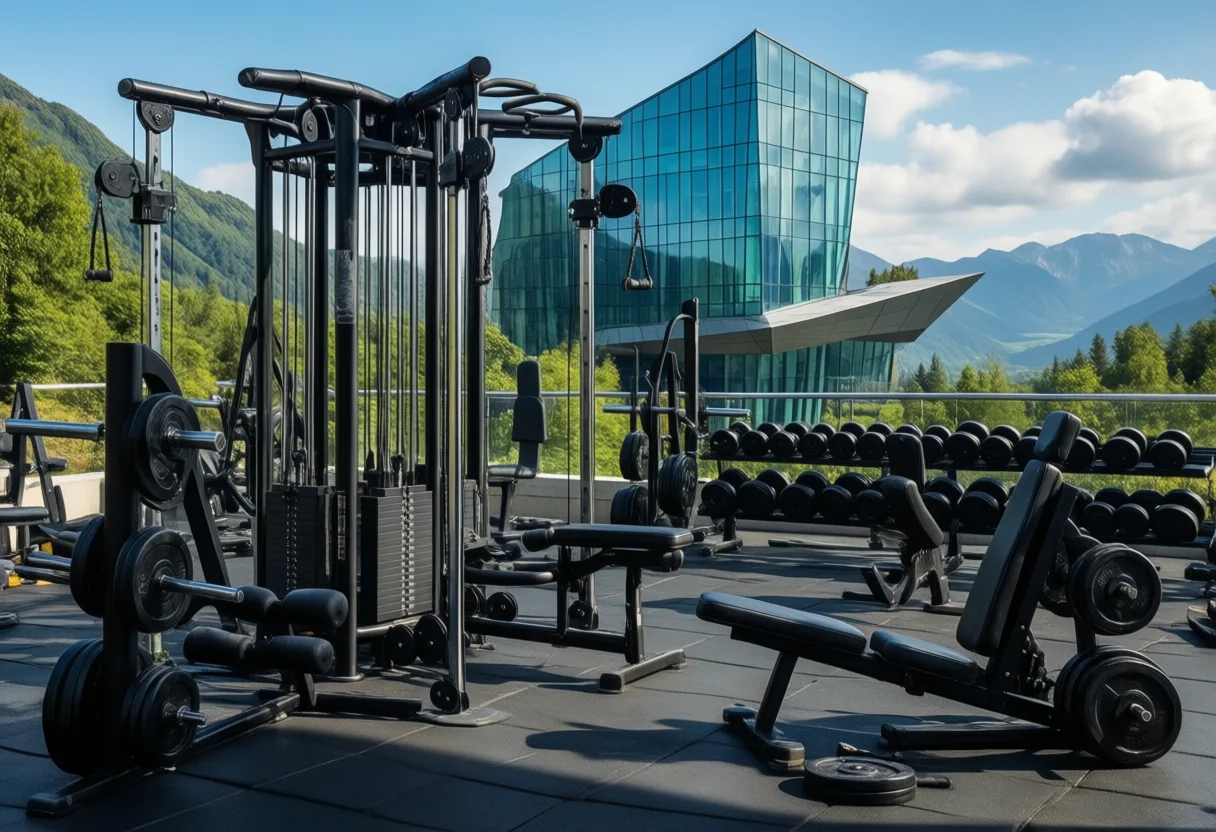

Your core is more than just a six-pack showpiece-it’s the foundation of every powerful movement, from Lifting heavy To sprinting fast. If you’ve been doing endless crunches and leg raises without seeing real progress, it might be time to add resistance. These Best weighted ab exercises Are designed to challenge your muscles in new ways, helping you build not only definition but functional strength that shows up in every part of your life.
Why Your Core Needs More Than Just Bodyweight
The Case for Resistance in Ab Training
Bodyweight ab work has its place-especially when you're Building initial Endurance and learning proper form. But like any muscle group, your abs respond best to increasing demands over time. Without added resistance, you eventually hit a plateau where reps no longer stimulate growth or strength gains. That’s where weighted training steps in, turning familiar movements into muscle-building powerhouses.
Resistance forces your abdominal muscles to contract harder, activating more motor units and deep fibers often left untouched. Think of it Like Upgrading from walking to sprinting-you’re still moving forward, but now you’re doing it with power and intensity. Whether you’re holding a dumbbell across your chest or pulling against cable tension, the extra load makes your rectus abdominis, obliques, and transverse abdominis work overtime.
Over time, this kind of stimulus leads to denser, more defined muscle tissue. You’ll start noticing not just visual changes-like sharper lines along your midsection-but also improved Posture, better balance, and reduced lower back discomfort. A strong core isn’t just about looks; it’s about becoming more resilient in everything you do.
How Progressive Overload Applies to Core Development
Progressive overload-the gradual increase of stress on the body during training-isn’t just for biceps and quads. It’s equally critical for core development. Your abs adapt quickly, which means doing 100 bodyweight crunches today won’t have the same impact in three months. To keep growing stronger, you need to challenge them with heavier loads, slower tempos, or increased time under tension.
Start by adding light weight to an exercise and focus on maintaining full range of motion. As your Strength improves, gradually increase the load while keeping your form tight. This slow climb ensures continuous adaptation without sacrificing technique. Just like you wouldn’t jump from a 50-pound squat to 200 overnight, your abs deserve the same thoughtful progression.
This principle transforms your ab routine from a finisher afterthought into a serious strength session. When you treat your core like a primary muscle group-training it with intention and measurable progress-you unlock levels of definition and stability most people never reach.
When to Add Weight to Your Ab Routine
Signs You’re Ready for Heavier Loads
You don’t need to wait until you can do 1,000 crunches to start adding weight. Instead, look for signs that your body is prepared: consistent form across sets, minimal fatigue in your hip flexors, and the ability to complete recommended reps with control. If you can perform 3 sets of 15–20 bodyweight crunches without losing tension in your abs, it’s likely time to level up.
Another clue? Boredom. If your ab workouts feel too easy or mechanical, your nervous system isn’t being challenged enough. That mental disengagement often signals physical stagnation. Adding resistance reignites focus, forcing you to concentrate on each rep rather than mindlessly going through the motions.
You should also feel stable during compound lifts like deadlifts or overhead presses. A solid core supports these big movements, so if you’re gaining strength there, your midsection is probably ready to handle direct loaded work. Remember, readiness isn’t about ego-it’s about control, consistency, and connection.
Choosing the Right Load Without Compromising Form
Picking the right weight is a balancing act between challenge and control. Start light-a 5- or 10-pound plate may be all you need at first. The goal isn’t to max out but to feel the burn in your abs, not your neck or hips. If you find yourself yanking the weight, arching your back, or cutting the movement short, the load is too heavy.
Use a tempo you can manage: two seconds up, one-second squeeze at the top, two seconds down. This rhythm keeps tension on the target muscles and reduces momentum. For rotational moves like twists, go even lighter-your obliques are smaller and more prone to overuse injury when rushed.
Think of your spine as a delicate column surrounded by coiled springs. Every weighted rep should compress and release those springs evenly, protecting your back while sculpting your front. Respect the process, and the results will follow.
9 Weighted Ab Exercises That Deliver Real Results
1. Weighted Crunches – Building Upper Ab Strength
Grab a weight plate and lie flat on your back, knees bent, feet on the floor. Hold the plate against your chest and engage your abs to lift your shoulder blades off the ground. Focus on curling upward with your upper abs, not jerking with your head or neck.
Keep your lower back pressed into the floor throughout the movement. At the top, pause briefly to maximize contraction before lowering slowly. This controlled motion builds thickness in the upper portion of your six-pack-the area that pops when you flex.
Aim for 3 sets of 12–15 reps, choosing a weight that challenges you by the last few reps. Over time, this exercise helps create separation between your ribs and pelvis, giving your abs a longer, more defined appearance.
2. Dumbbell Sit-Ups With Press – Power and Stability Combined
Lie on your back holding a dumbbell vertically above your chest with both hands. Perform a full sit-up, keeping the dumbbell steady the entire time. The challenge isn’t just in sitting up-it’s in preventing the weight from swaying, which forces your entire core to stabilize.
As you rise, maintain a slight bend in your elbows and keep your gaze forward to avoid straining your neck. At the top, press the dumbbell slightly toward the ceiling to engage your shoulders and deepen core activation. Then reverse the motion with control.
This move combines strength, balance, and coordination. It’s especially effective because it trains your abs through a full range of motion while demanding anti-rotational stability. Try 3 sets of 10–12 reps with a moderate weight.
3. Weighted Hanging Leg Raises – Targeting the Lower Core Under Load
Hang from a pull-up bar with straight arms. Place a ankle weight around your feet or squeeze a medicine ball between your ankles. Keeping your legs straight or slightly bent, raise them until they’re parallel to the floor-or higher, if possible.
The key is to initiate the movement from your lower abs, not your hip flexors. Imagine drawing your pelvis toward your ribcage. Avoid swinging or using momentum; a slow, deliberate lift delivers far better results.
Lower your legs with equal control, stopping just before they drop below hip level to keep tension constant. This exercise targets the often-neglected lower abs, helping eliminate that stubborn pouch below the navel. Aim for 3 sets of 8–12 reps.
4. Kneeling Cable Crunches – Controlled Flexion With Constant Tension
Kneel beneath a high cable pulley with a rope attachment. Grip the ends and position your hands near your temples. From a tall kneeling position, crunch downward by contracting your abs, tucking your ribs toward your pelvis.
Feel the resistance from the very first inch of movement-unlike free weights, cables provide constant tension all the way through. At the bottom, squeeze hard, then extend back up slowly without letting the weight stack fully reset.
This exercise isolates the rectus abdominis like few others. Because your hips stay fixed, there’s nowhere to hide-every inch of motion comes from your abs. Do 3 sets of 15 reps, focusing on the mind-muscle connection.
5. Weighted Russian Twists – Rotational Power With Resistance
Sit on the floor with knees bent and hold a weight-a dumbbell, plate, or medicine ball-in both hands. Lean back slightly to engage your abs, then rotate your torso side to side in a controlled motion.
Each twist should come from your obliques, not your arms. Think of your upper body as a solid block rotating at the waist. Touch the weight lightly to the floor beside you, then reverse direction without pausing.
This movement builds rotational strength essential for sports, daily activities, and balanced core development. It also enhances intermuscular coordination between your front and side abs. Shoot for 3 sets of 20 total reps (10 per side).
6. Standing Weighted Side Bends – Isolating the Obliques Effectively
Stand tall holding a dumbbell in one hand, arm straight down. Keep your chest up and spine neutral as you bend sideways at the waist, lowering the weight toward your knee. Squeeze at the bottom, then return to center with control.
Avoid leaning forward or twisting-this should be pure lateral flexion. Perform all reps on one side before switching. The unilateral loading creates an imbalance your obliques must resist, making them fire intensely.
This classic move shapes the “love handles” area by thickening the external and internal obliques. Use moderate weight and focus on smooth motion. Try 3 sets of 15 reps per side.
7. Renegade Rows – Dual-Purpose Core and Upper Body Challenge
Assume a plank position with hands on dumbbells, arms extended. Row one dumbbell toward your hip while stabilizing with the other arm. Your core will fight hard to prevent rotation, making this a brutal anti-rotational drill.
Keep your hips level and avoid hiking your shoulder-pull with your back, not your arm. Alternate sides with control, maintaining a rigid torso throughout. Even your transverse abdominis-the deepest layer-will be firing nonstop.
Beyond oblique engagement, this builds serious upper-body strength and grip endurance. It’s a full-body burner disguised as a core move. Complete 3 sets of 8–10 rows per arm.
8. Suspended Plank With Knee Tuck – Dynamic Stability and Strength
Anchor a suspension trainer (like TRX) and grab the handles in push-up position. From a stable plank, draw both knees toward your chest using only your abs. Return with control to the starting position.
The instability of the straps amplifies core demand, turning a static hold into a dynamic movement. Each tuck should feel like you’re rolling your spine into a ball, segment by segment.
This exercise hits multiple layers of the core simultaneously, improving both endurance and strength. It’s also gentle on the back compared to traditional sit-ups. Perform 3 sets of 10–12 tucks.
9. Dumbbell Pullover on the Floor – Engaging Deep Core Muscles
Lie on your back with knees bent, holding a dumbbell vertically above your chest with both hands. Slowly lower the weight over your head, allowing your arms to extend until you feel a stretch in your lats and abs. Then pull it back using your core and lats together.
Keep your lower back glued to the floor-this restriction ensures your abs stay engaged. The movement may seem small, but the tension builds quickly, especially in the deep stabilizing muscles.
This underrated move links upper-body mobility with core integrity. It teaches your abs to work in harmony with surrounding musculature, creating a more functional, integrated midsection. Do 3 sets of 12–15 reps.

Common Mistakes That Undermine Weighted Core Work
Overloading Too Soon and Losing Range of Motion
It’s tempting to grab the heaviest plate and go all-out, but doing so often sacrifices what matters most: full, controlled movement. When the weight is too heavy, you compensate by shortening the range of motion-lifting only halfway or flaring your ribs-and miss the peak contraction.
Partial reps train partial strength. Worse, they reinforce poor patterns that can lead to imbalances or strain. Always prioritize depth and control over load. A lighter weight that allows you to fully contract and stretch your abs will yield better long-term results.
Ask yourself: Are you feeling it in your abs, or just moving weight? If you can’t complete the full motion with crisp form, reduce the load. True progress isn’t measured by how much you lift, but by how well you own each rep.
Confusing Movement Quantity With Core Engagement
Doing 100 fast, bouncy reps might make you sweat, but it doesn’t mean your abs are working hard. Many people equate volume with effectiveness, but rapid, sloppy movements often shift effort to the hip flexors or neck muscles instead of the intended core targets.
True engagement feels tight, focused, and sustainable. You should be able to pause at any point in the movement and hold tension. If you’re swinging, rushing, or holding your breath, you’ve lost the connection.
Slow down. Focus on the squeeze. Make every rep count. Three sets of 12 perfect reps will reshape your core faster than five sets of 50 reckless ones.

How to Program Weighted Abs Into Your Weekly Routine
Frequency, Volume, and Placement in Your Workout Split
Train your weighted ab exercises 2–3 times per week, allowing at least one day of recovery between sessions. Like any muscle group, your abs grow during rest-not in the gym. Overtraining can lead to fatigue, poor recovery, and even postural issues.
Pair ab work at the end of upper-body or full-body days, when your central nervous system is already active but not fried. Alternatively, insert them into lower-body workouts as active core engagement between sets. Avoid doing them before heavy lifts-they pre-exhaust a stabilizing system you’ll need for squats and deadlifts.
Stick to 3–4 exercises per session, aiming for 2–4 sets each. Total volume should stay between 6 and 12 sets weekly, spread across different movements and angles. Rotate exercises every 4–6 weeks to keep your muscles adapting.
Beyond the Six-Pack – Functional Strength From a Resilient Core
A chiseled midsection is impressive, but the real win lies in what it enables. A strong, weighted-trained core supports your spine, improves breathing mechanics, and enhances performance in every athletic endeavor. It protects you from injury, powers your swings, sprints, and jumps, and gives you confidence in how you carry yourself.
These exercises aren’t just about aesthetics-they’re about building a body that performs, endures, and thrives. When you step onto the scale or catch your reflection, remember: the six-pack is just the surface. Underneath is a fortress of strength, forged rep by rep, weight by weight.
Now go train like it matters-because it does.
Level Up Your Core Game
Adding weight to ab exercises isn’t just about making things harder-it’s a smart move for building real strength. Our core muscles, like any other muscle group, need progressive overload to grow stronger. That means gradually increasing the challenge over time. While bodyweight moves like crunches or planks are great starters, tossing in some added resistance helps keep your gains going strong.
Why Weight Makes a Difference
Ever notice how lifting weights builds arm or leg strength? The same principle applies to your abs. Using dumbbells, cables, or even a medicine ball forces your core muscles to work harder with each rep. Exercises like weighted Russian twists fire up the obliques more effectively than air twists alone. Similarly, hanging leg raises with ankle weights dial up the intensity on the lower abs, helping you build endurance and definition over time.
Creative Ways to Add Resistance
You don’t need fancy gear to get started. A single dumbbell works wonders-hold it across your chest during sit-ups or press it overhead in a crunch variation to shift the load. For something different, try kneeling cable crunches where the constant tension from the machine targets the upper abs in a fresh way. Even plank variations level up fast: slide a dumbbell from hand to hand during a plank pull-through to engage stability and strength at once. These tweaks keep workouts engaging while delivering serious core benefits. Explore more stories, videos, and creators on Loaded.
Frequently Asked Questions
Why should I add weight to my ab exercises?
Adding weight challenges your abdominal muscles more than bodyweight alone, leading to increased strength, muscle growth, and definition. It helps overcome plateaus by applying progressive overload.
How do I know when I'm ready to start using weighted ab exercises?
You're ready when you can perform 3 sets of 15–20 bodyweight crunches with control and consistent form. Boredom during ab workouts is another sign you need more challenge.
What are the best weighted ab exercises for lower core strength?
Weighted hanging leg raises target the lower abs effectively. They require controlled movement from the lower abs, not the hip flexors, to eliminate the area below the navel.
How often should I train weighted ab exercises?
Train weighted ab exercises 2–3 times per week with at least one day of recovery between sessions. Pair them at the end of upper-body or full-body workouts.
This article was produced with AI assistance. How Chiseled Magazine uses AI.
Cassia explores the science and culture of fueling the body, from macronutrient timing to sustainable eating habits. She blends biochemical insight with real-world practicality, helping readers make smarter food choices without sacrificing enjoyment or balance.