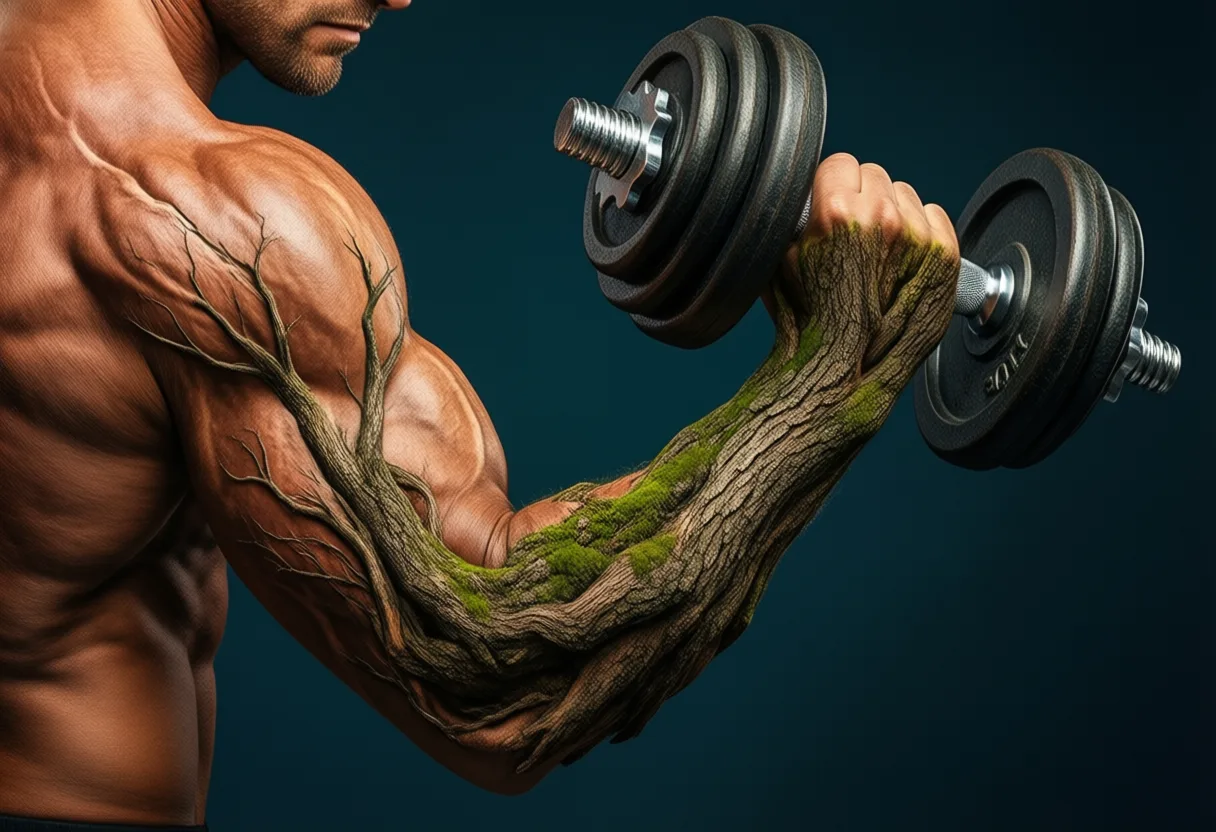

Your arms don’t just need to look good-they need to Work Well. The triceps make up two-thirds of your upper arm, meaning that if you want stronger, more defined arms, you can’t afford to ignore them. And the best part? You don’t need a gym membership or fancy machines-just a pair of Dumbbells And the will to push yourself.
Why Tricep Strength Matters for Real-World Arm Power
Strong arms aren’t just about looking sharp in a T-shirt. They’re about lifting your child with ease, pushing open a heavy door, or stabilizing yourself when you catch a stumble on the stairs. The triceps are your pushing Muscles-the ones that fire when you extend your elbow with power and control. Whether you’re pressing a suitcase into an overhead bin or launching out of the starting blocks, it’s your triceps leading the charge.
When you build Tricep strength, you’re not just sculpting muscle-you’re building functional resilience. These muscles support shoulder stability, improve posture, and enhance performance in everything from tennis to yard work. Weak triceps can leave you feeling sluggish, unstable, or even prone to injury during everyday movements.
Think of your arms as tools, not trophies. The stronger your triceps, the more capable you become. And when trained consistently with Progressive overload, they respond with impressive definition-giving you that sculpted, chiseled look without sacrificing strength for aesthetics.
How Dumbbells Beat Machines for Home Training
Machines have their place, but at home, dumbbells reign supreme. They’re compact, affordable, and versatile-fitting neatly under a bed or in a closet. More importantly, they force your body to stabilize each movement, engaging more muscle fibers than a guided machine ever could. That instability? It’s not a flaw-it’s the secret sauce.
With dumbbells, every rep becomes a full-body conversation. Your core tightens, your shoulders engage, and your triceps fire with precision. Machines isolate too much, often leaving supporting muscles undertrained. But dumbbells mimic real-world movement patterns, building strength that translates beyond the living room.
And let’s talk freedom. You’re not locked into a seat or Path Of motion. You can adjust angles, shift stances, and find the sweet spot that targets your triceps without straining your joints. That adaptability means you can train harder, smarter, and longer-no commute, no crowds, no excuses.
The 7 Best Dumbbell Tricep Moves You Can Do Anywhere
These exercises hit all three heads of the triceps-the long, lateral, and medial-for complete development. Do them in sequence, with minimal rest, and feel the burn build into strength. No bench? No problem. Most of these require only floor space and a pair of dumbbells.
1. Standing Overhead Extension
Hold one dumbbell with both hands and lift it overhead. Keep your elbows close to your ears and lower the weight behind your head by bending your elbows. Then, press back up until your arms are fully extended.
- Use a lighter weight at first to master the path of motion.
- Keep your ribcage down-don’t let it flare as you lift.
- Squeeze at the top to fully contract the triceps.
This move emphasizes the long head of the triceps, the largest of the three, which gives your arm that full, rounded look from the side.
2. Seated Single-Arm Press
Sit on the edge of a sturdy chair or bench. Hold a dumbbell in one hand, press it overhead, and lower it behind your head with control. Keep your torso upright and avoid leaning to the side.
- Perform equal reps on both arms to prevent imbalances.
- Brace your core to stop from swaying.
- Move slowly-especially on the lowering phase.
This unilateral variation helps correct strength discrepancies and builds shoulder stability alongside tricep power.
3. Lying Triceps Extension (Skull Crusher)
Lie on your back with a dumbbell in each hand, arms extended over your chest. Slowly bend your elbows to lower the weights toward your forehead, then press back up.
- Keep your upper arms vertical throughout the movement.
- Don’t let the dumbbells drift too far back-stay in line with your shoulders.
- Use a spotter or lighter weight if you’re new to the movement.
Despite the dramatic name, this exercise is safe when done right-and it delivers unmatched tricep activation.
4. Close-Grip Floor Press
Lie on the floor with knees bent, holding dumbbells at chest level. Press the weights up while keeping your elbows tucked close to your sides. Lower until your upper arms touch the floor.
- The floor limits range of motion, protecting your shoulders.
- Focus on driving through your palms and engaging your triceps.
- Keep your feet flat and glutes engaged for stability.
This is a joint-friendly alternative to the bench press that still builds serious pressing strength.
5. Bent-Over Kickbacks
Hinge at the hips, back flat, and hold a dumbbell in one hand. Keep your upper arm glued to your side and extend your forearm straight back like you’re elbowing someone behind you.
- Imagine you’re pouring water from the back of your hand.
- Don’t swing-control every inch of the movement.
- Squeeze at full extension for a peak contraction.
Kickbacks isolate the triceps like a laser, making them perfect for finishing off a set with precision.
6. Dumbbell Bench Dip Alternative
Place your hands on a sturdy chair or bench behind you, fingers forward. Lower your body by bending your elbows until they reach 90 degrees, then push back up.
- Keep your feet close to reduce difficulty, or extend legs for more challenge.
- Don’t let your shoulders hike up to your ears.
- Maintain a slight forward lean to target the triceps.
This bodyweight-based move uses dumbbells only for added resistance-place one on your lap if you want extra load.
7. Isometric Hold and Pulse Finisher
At the end of your workout, pick a light-to-moderate dumbbell. Perform a standing overhead extension, then hold the top position for 20–30 seconds. Add 10 small pulses-tiny extensions and bends at the elbow-without lowering the weight.
- This time under tension shocks the muscle into growth.
- Breathe steadily-don’t hold your breath.
- Use this as a burnout set once per week.
It’s not flashy, but it’s brutally effective for stimulating muscle fiber recruitment.
Common Form Mistakes That Undermine Results
Even with the right exercises, poor form can turn a great workout into a wasted one-or worse, an injury risk. One of the most common errors is flaring the elbows during extensions. When your elbows splay outward, you shift tension away from the triceps and onto the shoulders, reducing effectiveness and increasing joint strain.
Another mistake is using momentum. Swinging the weights, arching the back, or bouncing at the bottom of a movement might let you lift heavier, but it cheats your muscles out of growth. Control beats weight every time. Slow, deliberate reps build stronger neural connections and deeper muscle engagement.
And don’t rush the setup. A sloppy starting position-like letting your ribcage pop up during overhead work-compromises your core and spine. Take two seconds to set your posture: ribs down, core tight, shoulders stable. That small adjustment protects your body and maximizes results.
What Most People Get Wrong About Tricep Growth
Many people train triceps like an afterthought-tacking on a few half-hearted sets at the end of arm day. But if you want arms that turn heads, you need to train them like a priority. That means progressive overload, not just repetition. You must challenge your muscles to do more over time-more weight, more reps, or more time under tension.
Another misconception is that triceps respond best to high reps alone. While endurance work has its place, true muscle growth comes from a mix of rep ranges-low, medium, and high. Varying your approach keeps your muscles adapting and growing.
Finally, recovery is non-negotiable. Triceps are worked during chest and shoulder pressing movements, so they may already be fatigued before you even start isolation work. Train them 2–3 times per week with at least one full rest day in between. Overtraining leads to stalled progress, not shredded arms.

Putting It Together: A Simple Weekly Plan for Progress
Start with this three-day routine, performed on non-consecutive days. Use a weight that challenges you in the target rep range but allows you to maintain perfect form.
Workout A:
1. Standing Overhead Extension – 3 sets of 10–12 reps
2. Lying Triceps Extension – 3 sets of 8–10 reps
3. Bent-Over Kickbacks – 2 sets of 12–15 reps
Workout B:
1. Seated Single-Arm Press – 3 sets of 10 reps per arm
2. Close-Grip Floor Press – 3 sets of 10–12 reps
3. Isometric Hold and Pulse Finisher – 1 set at the end
Rotate between Workout A and B each session. After four weeks, increase the weight by 5–10% and reset the reps if needed.
Rest 60–90 seconds between sets. Focus on the mind-muscle connection-feel every contraction. Track your progress in a notebook or app. Small gains compound into big results.
Your Next Step Toward Defined, Functional Arms
You don’t need a gym to build arms that are strong, defined, and built to perform. You just need consistency, the right movements, and the discipline to push when it gets hard. Every rep is a step toward a more capable, confident version of yourself.
Grab your dumbbells. Clear a space. And start building arms that don’t just look powerful-but Are. The journey to stronger triceps begins today, one controlled extension at a time. Now go-your future self is waiting.
| Workout | Exercise | Sets & Reps |
|---|---|---|
| Workout A | Standing Overhead Extension | 3 sets of 10–12 reps |
| Workout A | Lying Triceps Extension | 3 sets of 8–10 reps |
| Workout A | Bent-Over Kickbacks | 2 sets of 12–15 reps |
| Workout B | Seated Single-Arm Press | 3 sets of 10 reps per arm |
| Workout B | Close-Grip Floor Press | 3 sets of 10–12 reps |
| Workout B | Isometric Hold and Pulse Finisher | 1 set at the end |
Why Your Triceps Deserve the Spotlight
Think your biceps do all the heavy lifting? Think again. The triceps make up about two-thirds of your upper arm mass, meaning building them isn’t just about strength-it’s key to that full, powerful arm look. Using dumbbells for tricep work gives you the freedom to train anywhere, and because each arm works independently, you’re more likely to fix imbalances you didn’t even know you had.
The Overhead Lift That Packs a Punch
The dumbbell overhead tricep extension is a favorite for a reason-it hits the long head of the muscle hard, the part that runs down the back of your arm and really defines its shape. Do it standing or seated, but keep your elbows close to your head to maximize tension where it counts. And here’s a fun twist: going lighter and slowing down the lowering phase can spike muscle activation just as much as heavy weights, making it perfect when you’re short on gear.
Sneaky Moves With Big Payoffs
Try the lying tricep extension (sometimes called the skullcrusher) with dumbbells instead of a barbell. It’s easier on the wrists and lets you adjust your grip slightly to find the most comfortable, effective angle. Another gem? The kickback. It might look old-school, but when done with control, it delivers a serious burn and helps lock in mind-muscle connection. Plus, doing these moves on a stability ball adds a core challenge-turning a simple set into a full-body win. Explore more stories, videos, and creators on Loaded.
Frequently Asked Questions
Why are triceps important for functional arm strength?
The triceps are the pushing muscles that fire when extending the elbow with power and control. They support everyday movements like lifting a child, opening heavy doors, or stabilizing during a stumble.
What are the benefits of using dumbbells for tricep exercises at home?
Dumbbells are compact, affordable, and versatile, requiring minimal storage space. They engage more muscle fibers by forcing the body to stabilize each movement and mimic real-world motion patterns.
How often should triceps be trained for optimal growth?
Triceps should be trained 2–3 times per week with at least one full rest day in between. They are also worked during chest and shoulder pressing, so recovery is essential.
Which dumbbell exercises target all three heads of the triceps?
The 7 best dumbbell tricep moves-like overhead extensions, lying extensions, and kickbacks-target the long, lateral, and medial heads for complete tricep development.
This article was produced with AI assistance. How Chiseled Magazine uses AI.
Cassia explores the science and culture of fueling the body, from macronutrient timing to sustainable eating habits. She blends biochemical insight with real-world practicality, helping readers make smarter food choices without sacrificing enjoyment or balance.