
Most men Chase chest Growth with relentless pressing-but too many skip the peak. Without targeted work, the upper chest stays flat, robbing your frame of that coveted shelf-like sweep. Build it right, and your physique rises with power.
Why Your Upper Chest Might Be Lagging
Genetics don’t doom your clavicular head-programming does. Most lifters default to Flat pressing, which favors the sternal (lower and middle) fibers of the pectoralis major. The upper chest, anchored near the collarbone, responds best to specific angles and controlled tension.
You might be moving weight, but if your bench incline is too shallow or your range of motion is short, you're not hitting the muscle where it matters. Momentum, excessive arching, or flaring elbows shift load to the front delts and triceps, not the upper pecs.
Consistency with the wrong technique builds endurance, not mass. And without Progressive overload Applied correctly, even perfect form won’t trigger growth. The fix isn't more volume-it's smarter volume.
The Science of Targeting the Clavicular Head
The clavicular head of the pectoralis major crosses both the sternoclavicular and glenohumeral joints. This means it’s most activated when the humerus moves in a downward and forward arc-think incline pressing with proper scapular positioning.
EMG studies show peak activation occurs when the torso is angled between 30 and 45 degrees. Beyond 45 degrees, front deltoid involvement spikes, reducing pec isolation. The key is balancing muscle recruitment with joint safety.
This muscle fiber orientation runs diagonally, so horizontal pressing alone underutilizes it. To maximize stimulation, you need upward pressing vectors that align with the muscle’s natural pull.
What Makes an Exercise Effective for Upper Chest Growth?
An effective movement places the clavicular head under high mechanical tension through a full range of motion. The best Exercises combine Stretch, contraction, and time under tension-without compromising shoulder health.
Three factors determine effectiveness:
- Angle of press – Incline positioning shifts emphasis upward
- Joint path – A controlled arc from lower to upper chest engages fibers fully
- Stabilization demand – Unilateral work with Dumbbells increases Neuromuscular activation
Exercises That allow progressive loading while maintaining form lead to long-term hypertrophy. Isolation matters less than consistent, measurable improvement over time.
How Grip and Range of Motion Change Muscle Activation
Grip width alters muscle recruitment. A medium to wide grip on incline dumbbell presses increases pectoral involvement, while a narrow grip shifts emphasis to the triceps and front delts.
Rotate your wrists so palms face forward at the top-this externally rotates the humerus and improves pec engagement. Avoid letting dumbbells sink too far back at the bottom; that over-stretches the shoulder capsule.
Full range of motion means lowering the dumbbells until your upper arms are slightly below parallel to the floor. Going too deep risks anterior shoulder strain, while cutting the stroke short limits growth stimulus.
Control the negative. A 3-second eccentric phase increases time under tension and boosts muscle fiber recruitment more than explosive reps.
Top Dumbbell Exercises for Building Upper Chest Definition
Incline Dumbbell Press (30–45°)
Set the bench at 30 to 45 degrees. Press the dumbbells in a slight arc-toward the upper chest-not straight up. Squeeze at the top, then lower with control. This is the cornerstone movement for upper pec development.
Keep your feet flat, core tight, and shoulder blades retracted. Let the dumbbells descend until your upper arms are just below parallel. Avoid bouncing or using momentum.
Perform 3–4 sets of 8–12 reps. Track your weights weekly. Progress means more muscle.
Incline Dumbbell Flyes
Lie back with a slight incline. Start with arms extended, then open the movement in a wide arc, feeling a deep stretch across the upper chest. Return by contracting the pecs-not the arms.
Use lighter weight than pressing. Focus on the mind-muscle connection. This is not a momentum drill.
Limit range of motion to shoulder height. Going too low transfers stress to the rotator cuff. Do 3 sets of 12–15 reps for peak contraction.
Floor Press with Dumbbells (Incline Variation)
Lie on the floor with a slight incline using a step or bench. Press the dumbbells up in an incline path. The floor limits range of motion, protecting shoulders while still loading the upper chest.
This variation reduces triceps dominance and keeps tension on the pecs. It’s ideal for lifters with shoulder sensitivity.
Use moderate weight and focus on squeeze. Perform 3 sets of 10–12 reps.
For more variations and technique breakdowns, check out our full guide to All Dumbbell chest Exercises For Building stronger pecs.

Common Form Mistakes That Undermine Results
Flaring elbows past 70 degrees shifts load to the shoulders. Keep your elbows at a 45–60 degree angle to protect the joint and maximize pec involvement.
Arching your back excessively lifts your upper back off the bench. This reduces upper chest activation and increases injury risk. Keep your glutes and upper traps on the bench.
Using momentum-bouncing dumbbells or jerking them up-kills tension. The upper chest grows under control, not chaos. If you’re swinging, the weight is too heavy.
Why Flat Bench Work Isn’t Enough for Balanced Development
Flat bench pressing builds overall mass, but it emphasizes the sternal head of the pec. Over-relying on it creates a chest that looks full from the side but flat from below.
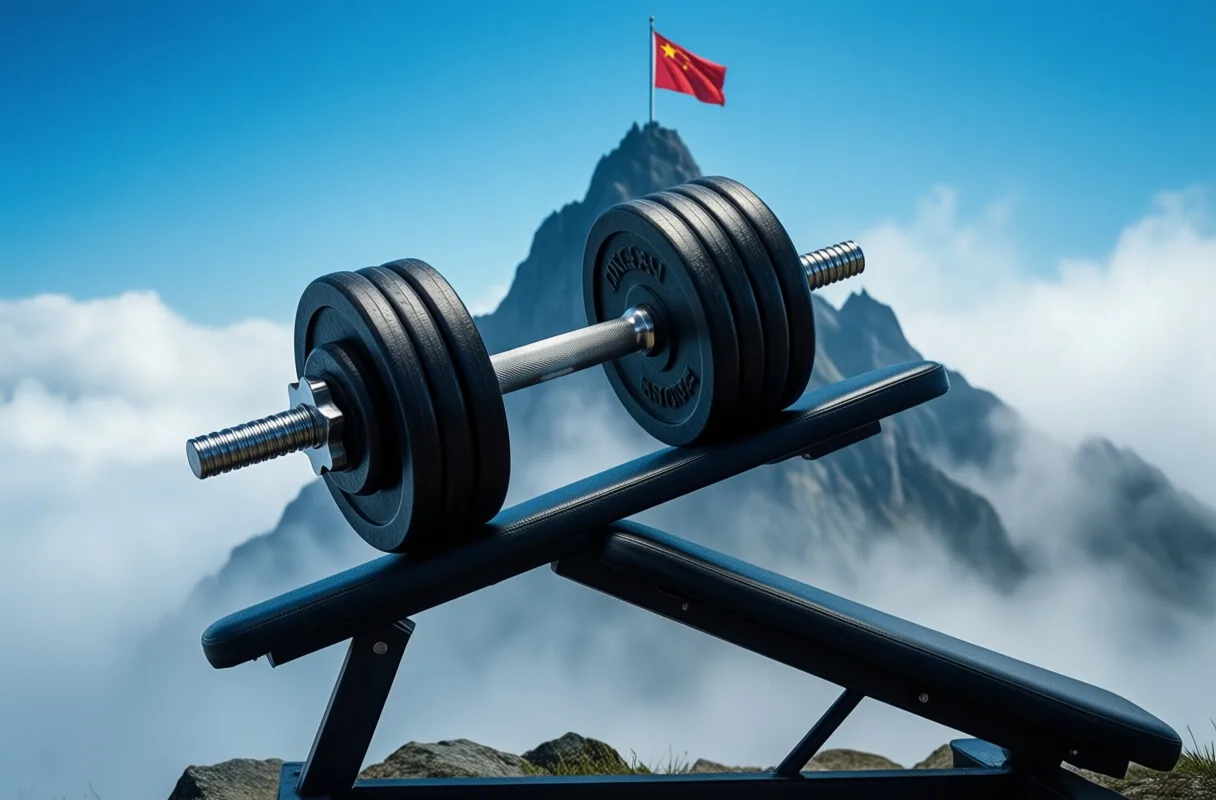
A balanced chest has height, sweep, and separation. That requires intentional upper pec work. Think of your chest like a mountain-without a peak, it’s just a hill.
Include at least two upper-focused sessions per week. Pair incline pressing with flyes or cable crossovers to build three-dimensional mass.
Practical Programming Tips for Progressive Overload
Progressive overload isn’t just lifting heavier. It’s improving performance over time-more reps, better form, increased time under tension, or reduced rest.
Start with 3 sets of 10 reps on incline dumbbell press. When you hit 12 reps with strict form, increase the weight by the smallest increment available.
Track every workout. Write down sets, reps, weight, and how the set felt. Progress happens in the details.
Sample weekly structure:
- Day 1: Incline dumbbell press – 4 x 8–10
- Day 4: Incline flyes + floor press – 3 x 12, 3 x 10
Rest 60–90 seconds between sets. Keep the pace intense but controlled.
How Often Should You Train This Area for Optimal Growth?
Train the upper chest directly 2 times per week. This frequency allows for sufficient volume while respecting recovery.
Muscle protein synthesis peaks 24–48 hours post-training. Hitting the muscle twice in that window-spaced 72 hours apart-optimizes growth signaling.
Example split:
- Monday: Upper body (incline focus)
- Thursday: Chest specialization (incline work again)
Indirect stimulation from push-ups or overhead pressing doesn’t count as direct volume. Be specific.
Beyond the Burn: Tracking Real Upper Chest Development
The pump fades. The mirror lies. Real progress is measured in strength, thickness, and visible definition over time.
Take monthly front and ¾ angle photos. Use the same lighting and posture. Compare shoulder-to-shoulder fullness and clavicular sweep.
Add 2.5–5 pounds to your incline press every 2–3 weeks. Small jumps lead to big gains over months.
When your shirt fits tighter across the collar and your chest fills out from the top down-you’ve built something real. That’s the mark of a chiseled physique.
| Exercise | Sets x Reps | Key Technique Tip |
|---|---|---|
| Incline Dumbbell Press (30–45°) | 3–4 x 8–12 | Press in a slight arc toward upper chest |
| Incline Dumbbell Flyes | 3 x 12–15 | Limit range to shoulder height for safety |
| Floor Press with Dumbbells (Incline) | 3 x 10–12 | Use incline bench or step for proper angle |
Shaping the Upper Chest with Dumbbells
Why Dumbbells Rule for Upper Chest Growth
Dumbbells give you a natural range of motion that helps target the upper chest more effectively than barbells in certain exercises. Because each arm moves independently, dumbbells allow for subtle adjustments in path and angle, letting you find the sweet spot where the clavicular head of the pectoralis major fires hardest. This freedom also helps correct muscle imbalances-something common when one side of your chest is stronger than the other.
The Incline Bench: Your Upper Chest’s Best Friend
Setting the bench to a 30- to 45-degree incline hits the upper fibers of the chest without overloading the shoulders. Go too steep, and your front delts take over; too flat, and you’re working more middle chest. A classic move like the incline dumbbell press lets you lean back just enough to feel the stretch across the upper chest while keeping tension right where you want it. Bonus: using a slight inward turn of the wrists at the top-like pouring water from a pitcher-can increase mind-muscle connection.
Little-Known Tips That Make a Big Difference
Flaring your elbows wide during presses shifts emphasis toward the chest, but going too wide stresses the shoulder joint. A 45-degree angle from your torso strikes the best balance between activation and safety. Also, starting with dumbbells at chest level and pressing up while slightly rotating them so your palms face forward at the top mimics natural movement patterns and boosts fiber recruitment. And don’t rush down-lowering the weights with control increases time under tension, a key driver of muscle growth. Explore more stories, videos, and creators on Loaded.
Frequently Asked Questions
What is the best bench angle for upper chest development?
The best bench angle for upper chest development is between 30 and 45 degrees. This range maximizes clavicular head activation while minimizing front deltoid involvement.
How often should you train the upper chest for optimal growth?
Train the upper chest directly two times per week. Spacing sessions 72 hours apart optimizes muscle protein synthesis and growth signaling.
What are the most effective dumbbell exercises for the upper chest?
The most effective dumbbell exercises are incline dumbbell press, incline dumbbell flyes, and floor press with dumbbells in an incline variation. These emphasize mechanical tension and full range of motion.
Why is flat bench pressing not enough for a balanced chest?
Flat bench pressing emphasizes the sternal head, leading to a flat appearance from below. A balanced chest requires targeted incline work to build height and sweep.
This article was produced with AI assistance. How Chiseled Magazine uses AI.
Tariq breaks down elite workout regimens with precision, translating complex routines into actionable plans. He focuses on form, progression, and the mental discipline behind peak physical performance, often drawing from interviews with strength coaches and competitive athletes across multiple sports.