
Your abs are more than just a showpiece. They’re the foundation of every powerful movement, the silent stabilizers behind every lift, sprint, and twist. When you train them with purpose-and the right load-you don’t just build a tighter waistline, you forge a Body That moves with precision, power, and resilience.
Why Stronger Abs Aren’t Just About Crunches
Most people think Core Training means endless sets of sit-ups or flutter kicks. But your core is not just about flexion. It’s about resisting motion, controlling rotation, and transferring force from your lower body to your upper body and back again.
Think of your midsection like the foundation of a house. If it’s weak or unbalanced, everything built on top-your posture, your lifts, even your confidence-begins to wobble. Traditional Bodyweight exercises Can build initial endurance, but they often fall short when it comes to building real strength.
To truly challenge your Core, you need more than repetition. You need resistance. That’s where weighted core training comes in. Adding load forces your deep stabilizing muscles-the transverse abdominis, obliques, and multifidus-to work harder and adapt, creating a tighter, more resilient trunk.
The Hidden Role of Weighted Resistance in Core Development
Weighted exercises don’t just make your abs bigger. They make them smarter. When you add external load, your nervous system recalibrates. Your muscles learn to fire faster, coordinate better, and stabilize under pressure.
Unlike bodyweight-only routines, weighted core work mimics real-world demands. Lifting a heavy suitcase, swinging a child overhead, or even bracing during a deadlift-all rely on a core that can handle load. Without resistance, your abs never learn to respond under stress.
And here’s the truth: you can have six-pack abs and still have a weak core. Aesthetic definition comes from low body fat, but strength comes from Progressive overload. That’s why incorporating resistance is non-negotiable if you want a core that performs as well as it looks.
Best Weighted Ab exercises For a Stronger Core dives deeper into how load transforms your midsection from passive to powerful.
What Makes a Core Exercise Truly Effective?
Not all core exercises are created equal. The most effective ones challenge stability, require full-body tension, and allow for progressive overload. If an exercise doesn’t make you brace, breathe, and fight to stay balanced, it’s probably not doing enough.
A truly effective core exercise should engage multiple planes of motion-anti-extension, anti-rotation, and anti-lateral flexion. These categories represent how your core functions in real life: stopping your spine from collapsing forward, twisting uncontrollably, or bending sideways under load.
Another key factor is leverage. The longer the lever or the farther the weight is from your center of gravity, the harder your core must work. This is why exercises like carries and rollouts are so potent-they use physics to your advantage.
How Load and Leverage Transform Stability Training
Load and leverage are the secret weapons of core development. When you hold a dumbbell in one hand during a Carry, your obliques fire intensely to prevent you from tipping sideways. This is leverage at work.
Add weight to a rollout, and your rectus abdominis must contract harder to prevent your hips from sagging. The added mass increases time under tension, a key driver of muscle growth and endurance.
Even small changes in positioning-like standing tall during a carry or extending your arms fully on a woodchop-amplify the challenge. These subtle shifts force your core to stabilize dynamically, not just statically.
This kind of training builds what fitness professionals call “functional hypertrophy”-muscle that’s not just visible, but useful. You’re not just chasing a look. You’re building a body that can handle anything.
Top Weighted Core Exercises for Strength and Stability
These nine movements combine resistance, leverage, and full-body integration to forge a core that’s strong, stable, and sculpted. Perform them with control, focus on form, and gradually increase weight to keep progressing.
1. Barbell Rollouts from Knees
Kneel on a mat with a barbell in front of you, hands gripping it just outside shoulder width. Engage your core and slowly roll the bar forward, extending your body as far as you can without letting your hips drop. Pause, then pull yourself back using your abs.
This exercise builds serious anti-extension strength. It targets the entire anterior core and forces you to maintain a neutral spine under load.
Start with just the bar or a light plate added. As your strength improves, increase the weight gradually.
2. Dumbbell Suitcase Carry
Hold a heavy dumbbell in one hand and walk a set distance-20 to 30 feet-while keeping your torso upright. Your obliques will fire hard to prevent you from leaning toward the weighted side.
This is pure anti-lateral flexion training. It builds resilience, improves posture, and enhances balance.
Keep your shoulders level and your steps even. Switch sides halfway through your set.
3. Cable Woodchop
Stand sideways to a cable machine, grab the handle with both hands, and pull it diagonally across your body-from low to high or high to low. Your core rotates under resistance, building functional strength.
This movement mimics athletic actions like swinging a bat or throwing a punch.
Use a weight that allows controlled movement. Focus on rotating through your torso, not your arms.
4. Weighted Ab Wheel Rollout
Kneel on the floor with an ab wheel in front of you. Place your hands on the handles, add a light weight plate on the axle, and roll forward as far as you can without collapsing.
The added weight increases resistance, making this already brutal exercise even more effective.
Only attempt this if you’ve mastered the bodyweight version. It’s one of the most demanding core builders you can do.
5. Hanging Leg Raise with Ankle Weights
Hang from a pull-up bar and lift your legs straight up, keeping them together. Add ankle weights to increase resistance and deepen the contraction in your lower abs.
This exercise builds serious lower abdominal strength and hip flexor control.
Keep your back flat and avoid swinging. The movement should come from your core, not momentum.
6. Landmine Rotational Press
Place one end of a barbell in a landmine or corner, grip the other end with both hands, and press it in an arc across your body. The rotational resistance challenges your obliques and serratus.
This movement builds rotational power and core endurance.
Keep your hips stable and let your upper body rotate under control.
7. Weighted Pallof Press
Attach a resistance band or cable at chest height. Stand sideways, grab the handle, and press it straight out in front of you. Hold for a few seconds, resisting the pull to rotate.
This is anti-rotation training at its finest.
Add weight gradually. The goal is to stay perfectly square, no matter how hard the band pulls.
8. Barbell Overhead Carry
Hold a barbell locked out overhead with both hands and walk a set distance. Your core must stabilize your entire body to prevent swaying or collapsing.
This builds full-body tension and serious core rigidity.
Keep your ribs down and your glutes tight. It’s harder than it looks.
9. Dumbbell Side Bend
Stand with a dumbbell in one hand and slowly bend sideways, letting the weight pull you down. Return to center using your oblique. Repeat on the same side before switching.
This isolates the obliques under load, building thickness and definition.
Use moderate weight and avoid rushing. Control beats speed every time.
Ab Weighted Exercises For A Stronger Core offers additional variations and progressions to keep your training fresh and effective.
Common Misconceptions About Building a Resilient Core
Many people believe that doing hundreds of reps with no weight is the best way to get visible abs. But high-rep, low-resistance work builds endurance, not strength. And endurance doesn’t always translate to power.
Another myth: that core training should only happen at the end of a workout. In reality, your core is involved in every compound lift. Training it directly with load ensures it keeps up with your progress.
Some also think core work should always feel easy or burn intensely. But real core strength often comes from stillness-holding a position under load, not just moving through it.
Why Six-Pack Goals Can Undermine Functional Strength
Chasing a six-pack is understandable. But when aesthetics become the only goal, you might skip the hard, heavy work that builds true stability. You might do endless crunches but never try a loaded carry.
Visible abs require low body fat, not just strong muscles. And if your training only focuses on flexion, you’ll miss out on the rotational and stabilizing strength that protects your spine and boosts performance.
Train for function first. The definition will follow when your body fat drops. A strong core isn’t just about how it looks-it’s about how it performs.

Putting It Into Practice: Programming Tips for Real Results
Start by adding one or two weighted core exercises to your routine each week. Perform them after your main lifts or on off days, depending on fatigue.
Aim for 2–3 sets of 6–12 reps, or 20–40 feet for carries. Focus on quality over quantity. A single well-executed set can be more effective than three sloppy ones.
Progress by increasing weight, range of motion, or time under tension. Just like with any muscle group, your core responds to overload.
How to Integrate Weighted Core Work Without Overtraining
Your core is involved in almost every movement, so avoid training it intensely every day. Give it at least 48 hours of recovery between heavy sessions.
Pair core work with upper body or lower body days, not both. For example, do carries after deadlifts or Pallof presses after bench press.
If you’re feeling sore or unstable during squats, scale back. Overtraining the core can lead to poor form and injury.
Beyond the Burn: Long-Term Gains in Power and Posture
Weighted core training doesn’t just build muscle. It builds confidence. When you know your center is strong, you move with authority-whether you’re lifting heavy, playing with your kids, or standing tall in a room.
Over time, you’ll notice better posture, less back pain, and more power in your lifts. Your body will feel connected, grounded, and ready for anything.
This isn’t just about getting shredded. It’s about becoming the strongest, most resilient version of yourself. And that starts from the inside out.
Building a Stronger Center with Weighted Moves
Why Add Weight to Core Work?
You might think of core exercises as just bodyweight crunches or planks, but tossing some extra resistance into the mix can seriously level up your strength game. Adding weight forces your deep stabilizing muscles-like the transverse abdominis and obliques-to work harder, not just for movement but for control. This isn't just about looking good; it’s about building a rock-solid foundation that supports everything from lifting groceries to explosive athletic moves.
Fun Facts from the Floor Up
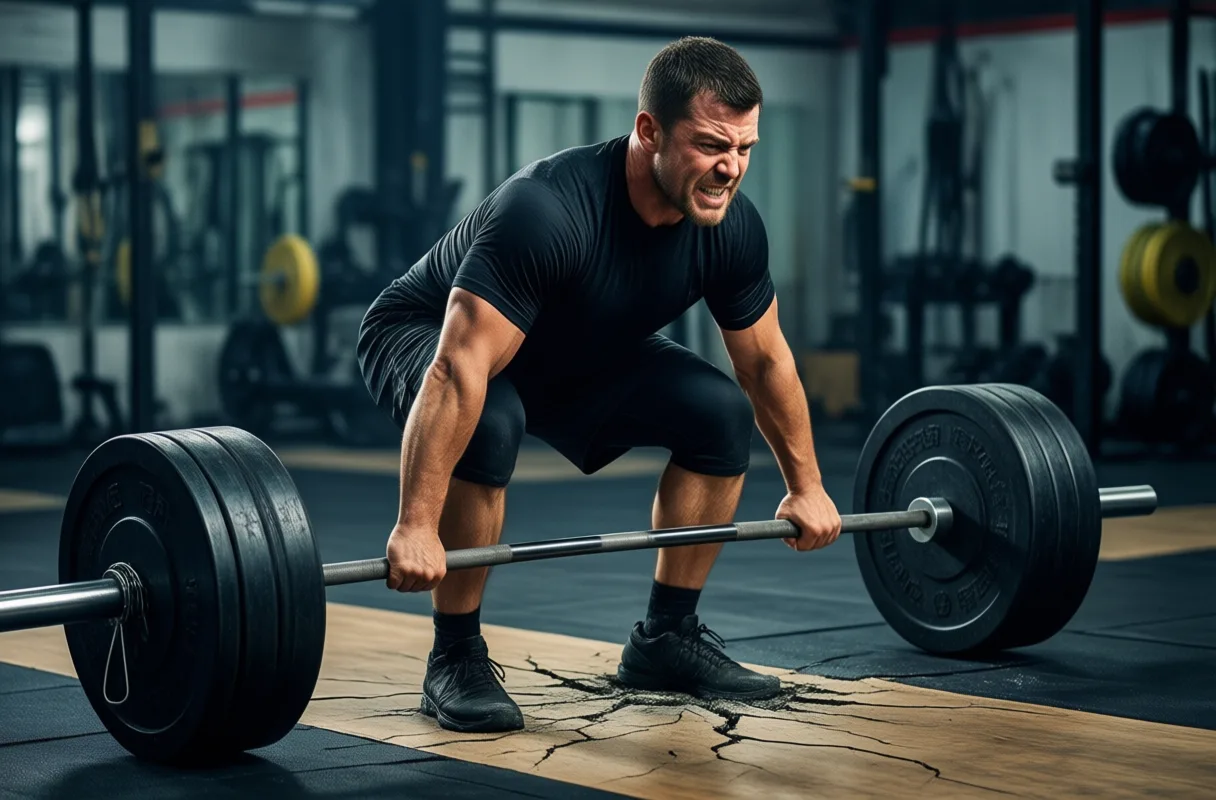
Did you know the squat isn't just a leg exercise? When you add a barbell across your shoulders, your core fires like crazy to keep you upright and balanced. That makes the back squat one of the most effective weighted core builders, even if it doesn't look like a traditional ab workout. Similarly, the deadlift-especially when loaded heavy-requires your entire midsection to brace like a natural weight belt, protecting your spine while powering the lift. These aren't isolated ab moves, but they demand serious core engagement under pressure, making them staples for functional strength. Even the overhead press challenges your core in a different way-balancing a weight overhead forces your abs and lower back to work overtime to prevent you from swaying or collapsing. It’s like a full-body puzzle where your core is the key piece holding everything together. Explore more stories, videos, and creators on Loaded.
Frequently Asked Questions
Why should I add weight to core exercises?
Adding weight forces deep stabilizing muscles like the transverse abdominis and obliques to work harder for control. It builds a strong foundation that supports real-world movements and athletic performance.
What makes a core exercise truly effective?
An effective core exercise challenges stability, requires full-body tension, and allows for progressive overload. It engages anti-extension, anti-rotation, or anti-lateral flexion under load.
Can compound lifts like squats and deadlifts train the core?
Yes, back squats and deadlifts require intense core engagement to stay balanced and protect the spine. Overhead presses also challenge the core to prevent swaying.
How often should I do weighted core exercises?
Add one or two weighted core exercises per week and allow at least 48 hours of recovery between heavy sessions. Pair them with upper or lower body workouts to avoid overtraining.
This article was produced with AI assistance. How Chiseled Magazine uses AI.
Cassia explores the science and culture of fueling the body, from macronutrient timing to sustainable eating habits. She blends biochemical insight with real-world practicality, helping readers make smarter food choices without sacrificing enjoyment or balance.