
Dumbbells Don’t lie.
They demand control, balance, and full-range strength-no cheating, no momentum, just muscle.
This is where raw power meets sculpted definition.
Why Dumbbells Beat Machines for Chest Development
Machines Guide the path. Dumbbells demand you forge it.
Each rep requires stabilization, engaging more motor units and deep chest fibers.
You’re not just moving weight-you’re commanding it.
Free weights allow natural movement patterns. Your shoulders track through their optimal arc, reducing strain and increasing pec tension. Unlike fixed-path machines, dumbbells adapt to Your Anatomy, not the other way around. This individualized range builds stronger, more balanced Pecs Over time.
Unilateral training with dumbbells also exposes and corrects imbalances. One side can’t dominate. Both arms earn their place. That symmetry translates to a fuller, more defined chest-visible from every angle. For a complete breakdown of movement variations, check out All Dumbbell Chest Exercises For Building Stronger Pecs.
The Science of Muscle Pump: How It Fuels Growth
The pump isn't just a feeling-it's a signal.
Blood floods working muscles, delivering nutrients and removing fatigue byproducts. This cellular swelling may directly stimulate hypertrophy over time.
Metabolic stress from sustained tension triggers anabolic pathways. Lactate buildup, cell hydration, and mechanical stretch combine to tell your body: Adapt or fail. The result? Greater muscle growth when paired with progressive overload.
While the pump alone won’t build mass, it enhances time under tension-the real engine of Development. Controlled eccentrics, peak contractions, and minimal rest amplify this effect. Think of the burn as feedback, not fatigue. It means the work is sticking.
What Makes the Chest Respond to Dumbbell Training?
The pectoralis major is a fan-shaped muscle with distinct upper, middle, and lower fibers. To develop it fully, you must attack it from multiple angles. Dumbbells Make that possible-with precision.
Each hand moves independently, allowing subtle adjustments in hand path and elbow flare. You can emphasize clavicular (upper), sternal (mid/lower), or costal (deep) fibers based on bench angle and arm position. That specificity builds three-dimensional mass.
Dumbbells also increase time under tension at the bottom of each rep. The stretch under load activates more muscle spindles-key drivers of growth. No machine delivers that same deep activation without risk.
How Range of Motion Transforms Pec Activation
Full range means full results.
Shallow reps skip the most productive parts of the movement. The deepest stretch and hardest contraction are where gains live.
When the dumbbell descends below chest level, the pecs lengthen under load. This eccentric stretch stimulates greater protein synthesis. Studies show longer muscle lengths during training lead to superior hypertrophy.
Locking out at the top completes the cycle. It forces maximal fiber recruitment and drives blood into the muscle. Partial reps shortchange both phases-robbing you of growth and definition.
Control every inch. Let gravity assist only when necessary. Mastery comes from movement mastery-not how much you lift.
7 Dumbbell Moves for a Full Chest Pump
These seven exercises cover every vector of chest development. They build strength, trigger the pump, and carve visible separation. Perform them in sequence for maximum impact.
1. Flat Dumbbell Bench Press – Building Raw Power
Lie back on a flat bench, feet planted, core tight. Press the dumbbells straight up from mid-chest, elbows tucked slightly. Drive through the heels to maintain stability.
This movement builds foundational strength. It recruits the entire pectoral surface while demanding triceps and anterior deltoid support. Over time, it becomes the backbone of pushing power.
Use a controlled descent-3 seconds down, explode up. Keep wrists neutral. Avoid flaring elbows past 75 degrees to protect the shoulder joint.
2. Incline Dumbbell Press – Targeting the Upper Chest
Set the bench to 30–45 degrees. Hold dumbbells at shoulder width, palms forward. Press upward in a slight arc, leading with the pinky finger.
The upper chest gives the illusion of fullness when viewed from the front. Underdeveloped here creates a flat look-even with big arms. This move fixes that.
Focus on initiating the press with the upper pecs. Squeeze at the top like you’re trying to hold a dollar bill between your collarbones.
3. Decline Dumbbell Press – Maximizing Lower Pec Definition
Adjust the bench so your head is lower than your hips. Grip the dumbbells firmly, lower them slowly to the lower sternum, then drive up with force.
The lower fibers give the chest its “cut” appearance-especially in lean athletes. This area separates the chest from the abs visually. A strong lower pec ties the torso together.
Lean slightly back to isolate the region. Do not let ego dictate weight. Control beats load every time here.
4. Dumbbell Flyes – Stretching for Hypertrophy
Lie flat, arms extended outward in a wide arc. Lower the weights slowly until you feel a deep stretch across the chest. Return using only chest strength-no leg drive.
Flyes isolate the pecs like no press can. They eliminate triceps assistance, forcing pure adduction. The constant tension magnifies the pump.
Keep a soft bend in the elbows. Imagine hugging a giant tree on the way up. If your shoulders hurt, reduce range or switch to cables.
5. Floor Press – Locking in Triceps and Chest Synergy
Lie on the floor, knees bent, feet flat. Lower the dumbbells until your upper arms touch the ground. Press back up explosively.
The floor press limits range but increases lockout intensity. It teaches triceps to fire under heavy load-critical for pressing strength. It also protects the shoulders.
Because you can’t bounce, each rep starts from dead stop. That builds starting strength and eliminates momentum. Pair it with presses for cumulative fatigue.
For added triceps engagement after your chest work, try the Best Dumbbell Tricep Workout For Strength And Definition.
6. Neutral-Grip Dumbbell Press – Joint-Friendly Power
Hold dumbbells with palms facing each other. Press straight up from chest level. Keep elbows close to the body.
This grip reduces anterior shoulder stress. It allows heavier loads with less joint pain-ideal for high-frequency training. The neutral path aligns with natural mechanics.
It hits the mid-pecs hard while sparing connective tissue. Perfect for lifters with past injuries or chronic tightness.
7. Standing Dumbbell Pullover – Engaging the Sternal Fibers
Stand tall, hold one dumbbell vertically by the end plate. Raise it overhead, then lower it behind your head while keeping arms slightly bent. Reverse the motion using chest tension.
This old-school move stretches the sternal portion of the pectorals unlike any other. It also engages the lats-but focus on chest initiation.
Do not arch excessively. Maintain ribcage depression. Feel the stretch deep in the chest, not just the shoulders.
Common Form Mistakes That Kill Your Pump
Most lifters sabotage their own progress. They chase weight instead of tension. They swing, bounce, and rush-killing the very stimulus they seek.
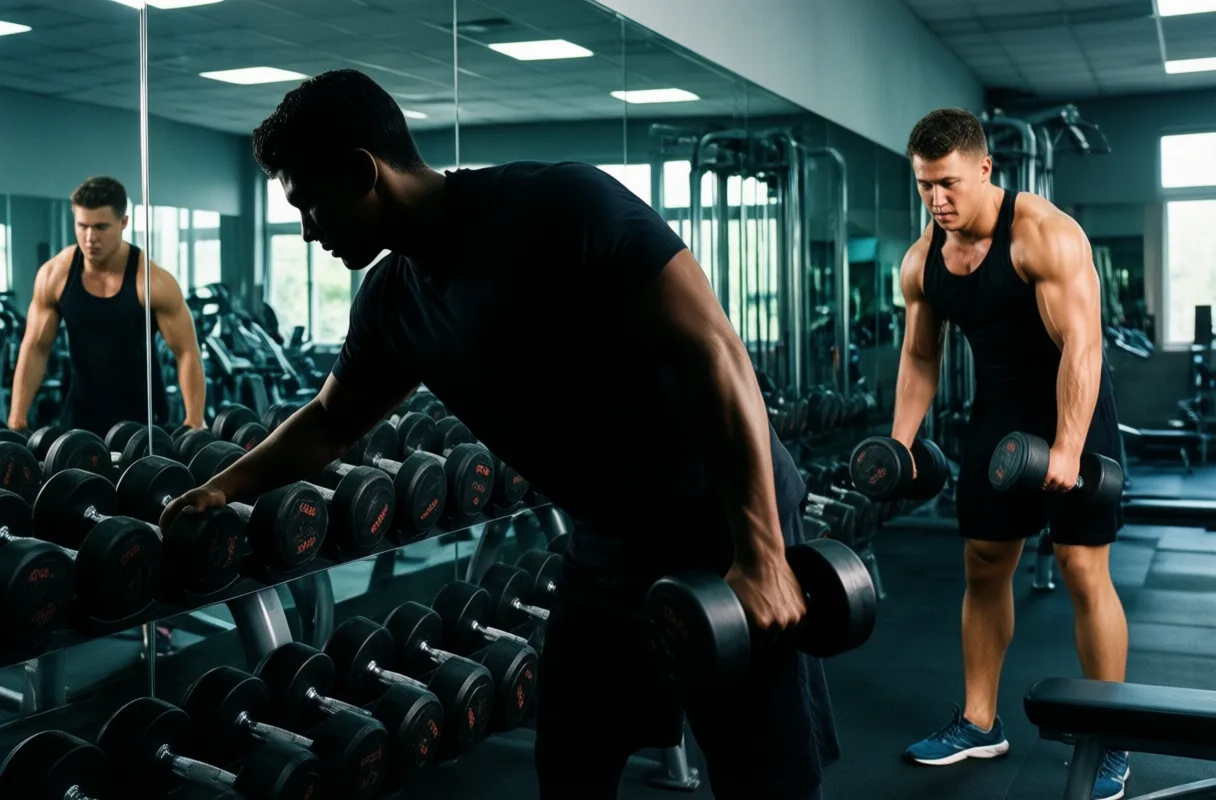
Arching too high shifts emphasis to shoulders and traps. Your lower back should stay grounded, not bridged. Keep ribs down, glutes tight, and core engaged throughout.
Flaring elbows past 90 degrees strains the rotator cuff. Tuck them slightly-between 45 and 60 degrees-for optimal pec recruitment and joint safety.
Using momentum breaks time under tension. Each rep must be earned. If you can’t control the negative, the weight is too heavy.
Why Most Lifters Waste Energy on the Eccentric Phase
The lowering phase builds strength and size-if done right. Most drop the weight like it’s hot. They miss half the battle.
A controlled eccentric (3–4 seconds) increases microtrauma and metabolic stress. It prepares the muscle for explosive concentric power. Think of it as loading the spring.
Stretch under load signals growth. But only if the muscle remains taut. No free-falling. No collapsing at the bottom. Master the descent, and the ascent follows.
Programming Your Pump: Reps, Sets, and Tempo
Structure determines success. Without a plan, effort goes nowhere. Aim for 3–4 exercises per session, 3–4 sets each, 8–15 reps per set.
Use moderate loads-70–80% of your max. This range maximizes volume without compromising form. Save near-maximal efforts for compound lifts only.
Tempo matters. Try 3-1-1 (3 seconds down, 1-second pause, 1-second up) on flyes and presses. Adjust based on exercise: faster on lockouts, slower on stretches.
Rest 60–90 seconds between sets. Short enough to retain pump, long enough to recover. Track progress weekly-add reps, improve form, increase weight gradually.
How to Structure Volume Without Overtraining
More isn’t better. Effective is better. Train chest 1–2 times per week with at least 48 hours of recovery between sessions.
Total weekly sets should stay between 12 and 20 for intermediates. Beginners start at 12. Advanced lifters may push higher-but only with proper nutrition and sleep.
Listen to your body. Soreness is normal. Joint pain is not. Fatigue that lasts days means you’ve crossed the line. Dial it back. Consistency beats intensity over time.
Beyond the Burn: Turning Pump into Lasting Strength
The pump fades. Strength stays. But the two are not enemies-they’re allies. The pump reveals weak points. Strength fixes them.
High-tension, high-volume work improves muscle endurance and capillarization. That supports recovery and nutrient delivery during heavy lifting phases.
Use pump work as a bridge. After heavy compounds, finish with isolation moves. Accumulate volume safely. Build resilience. Then return stronger.
The Real Link Between Pump Work and Functional Power
Pump training isn’t just for show. It builds work capacity-the ability to produce force repeatedly. That translates to sports, daily life, and heavier lifts.
Muscles trained under prolonged tension become more efficient. They recruit fibers faster, clear waste quicker, and resist fatigue longer. This is functional hypertrophy.
Combine pump work with progressive overload. Let aesthetics fuel performance. Let strength deepen definition. They rise together.
Putting It All Together: A Sample Chest Session
Here’s a proven 45-minute chest routine. It builds size, strength, and definition-all with dumbbells.
- Flat Dumbbell Bench Press – 4 sets x 8–10 reps (3-1-1 tempo)
- Incline Dumbbell Press – 3 sets x 10–12 reps
- Dumbbell Flyes – 3 sets x 12–15 reps (focus on stretch)
- Floor Press – 3 sets x 10 reps (explosive concentric)
- Standing Dumbbell Pullover – 3 sets x 12 reps (slow negative)
Warm up with light presses and dynamic stretches. Cool down with foam rolling and deep breathing. Hydrate before, during, and after.
Track every session. Push for progression. Stay patient. The mirror doesn’t lie-and neither does the barbell.
| Exercise | Primary Focus | Key Technique Tip |
|---|---|---|
| Flat Dumbbell Bench Press | Raw power and full pec recruitment | 3-second descent, explode up, elbows tucked |
| Incline Dumbbell Press | Upper chest fullness | Press in arc, squeeze at top like holding dollar bill |
| Decline Dumbbell Press | Lower pec definition | Lean back slightly, control descent |
| Dumbbell Flyes | Pec stretch and isolation | Use chest strength only, soft elbow bend |
| Floor Press | Lockout strength and triceps synergy | No bounce, start from dead stop |
| Neutral-Grip Dumbbell Press | Joint-friendly mid-pec training | Palms face each other, elbows close |
| Standing Dumbbell Pullover | Sternal pec and stretch | Focus on chest initiation, avoid excessive arch |
Building Better Chest Workouts with Dumbbells
Why Dumbbells Stand Out
Dumbbells aren’t just gym staples-they’ve been part of strength training since the 1800s, evolving from simple stone weights to the adjustable models you see today. What makes them a go-to for chest workouts? They allow each arm to move independently, helping correct muscle imbalances over time. That means if your right side is a bit stronger, you’ll notice it fast and can adjust, leading to more balanced gains.
Fun Facts That Pump You Up
The bench press often steals the spotlight, but the dumbbell chest press actually activates more stabilizer muscles thanks to the free range of motion. And here’s a quirky one: the motion of lifting dumbbells mimics ancient Greek halteres-stone or metal weights used by athletes in the original Olympic Games. While we’re not throwing them in competition today, the principle remains: controlled movement builds real strength.
Another cool detail-unlike fixed barbells, dumbbells let you use a natural arc of motion, reducing strain on the shoulders. That slight inward path as you press up? It’s not just comfortable-it’s biomechanically smarter for hitting the pecs evenly. Plus, studies show that using dumbbells in chest exercises can increase time under tension, a key factor in muscle growth, simply because each rep demands more control. Explore more stories, videos, and creators on Loaded.
Frequently Asked Questions
Why are dumbbells better than machines for chest development?
Dumbbells require stabilization and engage more motor units and deep chest fibers. They allow natural movement patterns, adapt to individual anatomy, and help correct muscle imbalances through unilateral training.
How does the muscle pump contribute to chest growth?
The pump increases blood flow, delivering nutrients and creating cellular swelling that may stimulate hypertrophy. It enhances time under tension when combined with controlled eccentrics and peak contractions.
What are the key chest fibers targeted by dumbbell exercises?
Dumbbell exercises target upper (clavicular), middle and lower (sternal), and deep (costal) fibers of the pectoralis major through varied bench angles and arm positions.
What are common form mistakes that reduce chest pump effectiveness?
Arching too high shifts focus to shoulders and traps. Flaring elbows past 90 degrees strains the rotator cuff. Using momentum breaks time under tension and reduces muscle engagement.
This article was produced with AI assistance. How Chiseled Magazine uses AI.
Tariq breaks down elite workout regimens with precision, translating complex routines into actionable plans. He focuses on form, progression, and the mental discipline behind peak physical performance, often drawing from interviews with strength coaches and competitive athletes across multiple sports.