
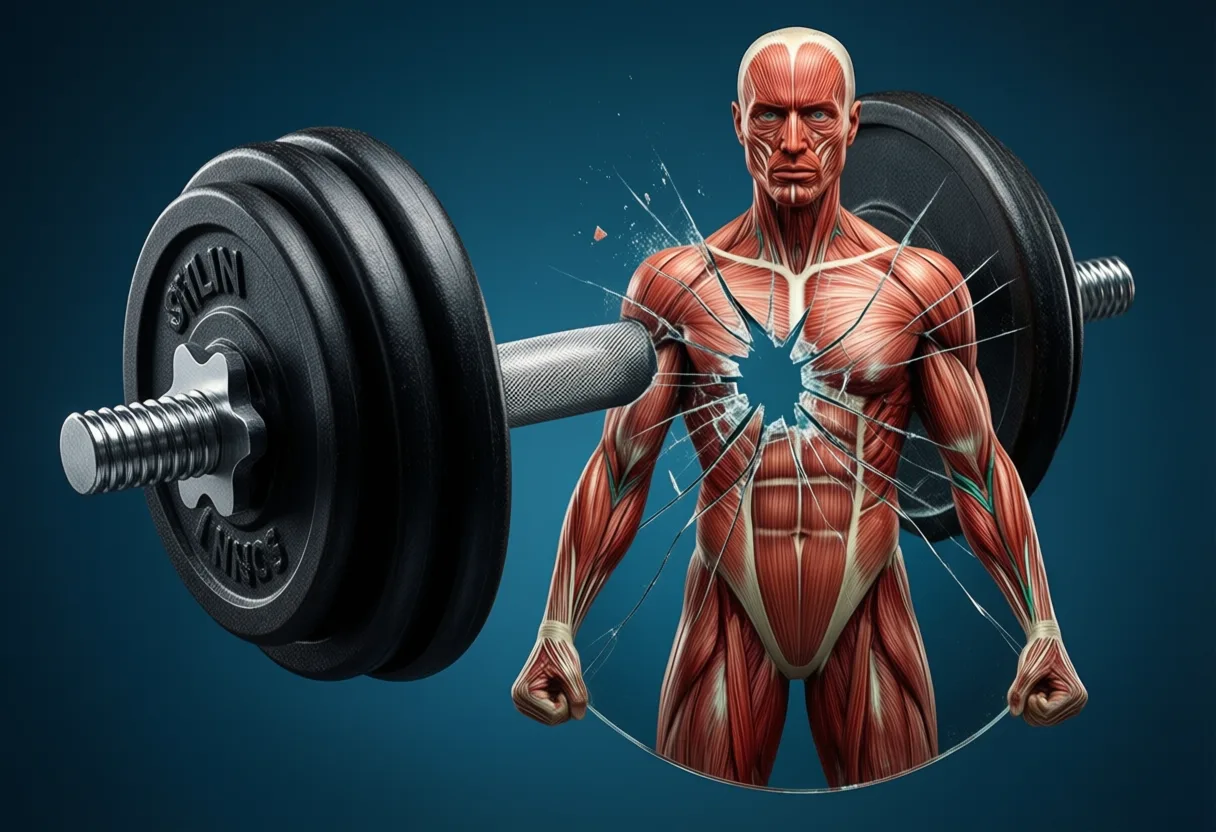
Most people start strength training with fire in their eyes and visions of muscle growth, but within weeks, the momentum fizzles. They follow Cookie-cutter routines, ignore personal limits, and wonder why the mirror won’t change.
The truth? Generic plans fail because they treat every Body like A clone. Your ideal path isn’t buried in a celebrity’s routine or a viral workout-it’s shaped by your body, goals, and lifestyle. This isn’t about shortcuts. It’s about alignment.
Why Most People Fail at Building Strength (And How to Avoid It)
People walk into the gym believing more volume, heavier weights, or louder grunts Equal faster Results. But effort without direction is just noise. Many follow programs designed for elite athletes or social media influencers whose lives revolve around training-something most professionals can’t replicate.
Consistency beats intensity when life includes meetings, commutes, and family dinners. Skipping recovery, misjudging nutrition, or ignoring fatigue leads to burnout, not breakthroughs. The strongest lifters aren’t always the loudest-they’re the ones who respect their limits.
To avoid the trap: - Track progress beyond the scale (strength, energy, sleep quality) - Prioritize form over ego - Accept that plateaus are part of growth, not proof of failure
Success isn’t about doing what everyone else does. It’s about doing what You Can sustain.
The Hidden Gap Between Generic Routines and Real Results
You’ve seen the “best 6-week shred plan” or the “pro bodybuilder split” floating online. They promise mass, definition, and power. But most were built for a specific physiology, recovery capacity, or Equipment setup-none of which may match yours.
A routine that works for a 25-year-old with three hours a day and a recovery tank won’t translate to a 40-year-old with back tightness and 45 minutes between work and dinner. That gap-between the ideal and the real-is where most programs collapse.
Results Come not from mimicking, but from adapting. The best plan fits your schedule, energy, and goals without forcing you into a mold. Whether you're training for longevity or aesthetics, alignment beats adherence to a flawed blueprint.
Consider Vinny Paz’s approach-relentless, yes, but also precise and periodized. His methods weren’t just about grit; they were about strategy. Vinny Paz’s Insane 5 Training Secrets for Unbeatable Strength! Explores how discipline and timing matter more than brute force.

What Your Body Type Says About Your Training Path
No two bodies respond the same to strength training. Some pack on muscle fast, others build endurance naturally, and a few seem to gain fat at the sight of a dumbbell. These differences aren’t flaws-they’re clues.
Ectomorphs often thrive on lower volume with longer rest, letting their nervous systems recover between heavy lifts. Mesomorphs respond well to varied stimuli-hypertrophy, power, even metabolic work-without losing balance. Endomorphs may benefit from structured volume paired with strategic conditioning.
But labeling yourself isn’t enough. You have to test. Try a phase of heavy compound lifts, then shift to higher reps. Observe how your joints feel, how your energy shifts, how your clothes fit.
Your body isn’t broken because it doesn’t look like a fitness cover. It’s giving you feedback. Listen.
How Goals Shape Your Ideal Program-From Hypertrophy to Power
Are you training to build mass, break a powerlifting PR, or simply move better in daily life? Your goal isn’t just a destination-it’s the map for your training.
Hypertrophy demands time under tension, controlled eccentrics, and Progressive overload With moderate loads. Power development requires explosive intent, low reps, and full recovery. Strength endurance blends both, often with minimal rest.
If your goal is functional strength, movements like the farmer carry deliver real-world carryover. They build grip, core stability, and posture-without needing a power rack. Farmer Carry: Top 5 Benefits for Strength Training breaks down why this simple move punches above its weight.
Don’t confuse activity with progress. A program that builds muscle won’t necessarily improve your vertical jump. Know what you want, then train for it-specifically.
The Mind-Muscle Connection: Are You Wired for Volume or Intensity?
Some lifters thrive on high-volume days-pump, burn, repeat. Others feel strongest when they go heavy, low-rep, and focused. This isn’t preference alone. It’s neurology.
Your nervous system has a rhythm. Push too far outside it, and performance drops. Volume junkies may burn out on intensity-based programs. Max-strength athletes often feel unchallenged in pump-focused circuits.
Tuning into this connection means asking: Do you recover faster from 5x5 squats or 3x12 leg presses? Do you feel energized after a brutal session, or drained for days?
There’s no “best” way to train-only what works For you. Some find clarity in solitude, others need the energy of a group. The mind-muscle link isn’t mystical. It’s measurable in consistency, focus, and effort.

Recovery Reality Check: What Your Lifestyle Reveals About Your Limits
You can’t out-train poor recovery. Sleep, stress, job demands, and even screen time shape your ability to grow stronger. A 30-minute workout means little if you’re averaging five hours of sleep and eating on the run.
Professionals with high-stress jobs often need less volume, not more. Chronic cortisol dulls gains, weakens immunity, and stalls fat loss. Recovery isn’t passive-it’s a training variable.
Ask yourself: - Do you wake up refreshed or groggy? - Can you handle back-to-back hard sessions? - Do small injuries linger?
Older lifters, in particular, benefit from smart programming that supports joint health and balance. Strength training isn’t just for the young. Strength Training For Seniors Builds Balance And Independence shows how movement preserves autonomy and quality of life.
Recovery isn’t weakness. It’s where growth happens.
Equipment Access vs. Potential: Can You Still Succeed With Minimal Gear?
You don’t need a home gym to build real strength. Bodyweight, resistance bands, and a single kettlebell can deliver results-if used with purpose.
Minimalist training forces creativity and consistency. Push-ups, lunges, and isometric holds build resilience. The key is progressive overload: increasing time, difficulty, or control over time.
For those starting out or training at home, simplicity is an advantage. Fewer distractions, fewer excuses. Strength Training At Home With Minimal Equipment For Beginners outlines how to build a foundation without breaking the bank.
Equipment opens doors, but discipline walks through them.

The Motivation Spectrum: From Solo Grinders to Coach-Dependent Lifters
Some people thrive alone, tracking reps in silence. Others need a coach’s cue, a partner’s push, or a class’s energy. Neither is better-just different.
Solo grinders value control and routine. They stick to plans, log workouts, and rarely miss a session. But they risk stagnation without external feedback.
Coach-dependent lifters benefit from accountability and correction. They may struggle when left to design their own programs, but excel when guided.
Where do you fall? If you skip workouts without a plan or feedback, you might need structure. If you resent being told what to do, autonomy could be your fuel.
Motivation isn’t constant. It’s a dial, not a switch. Build systems that work when inspiration fades.
Matching Your Answers to a Customized Plan That Actually Fits
No single program works for everyone. But a well-designed strength training quiz can reveal patterns-your recovery capacity, preferred style, and hidden barriers.
It’s not magic. It’s data. Your answers highlight mismatches between your current routine and your real-life context. Maybe you’re doing powerlifting volume with endurance recovery. Or chasing hypertrophy with inconsistent effort.
The goal is alignment: training that fits your body, schedule, and psychology. A customized plan doesn’t guarantee overnight results, but it reduces friction-the enemy of progress.
Use insights to adjust rep ranges, rest periods, or exercise selection. Small tweaks, consistently applied, beat drastic overhauls.
Beyond the Quiz: Turning Insights Into Long-Term Gains
A quiz is a starting point, not a finish line. Real transformation happens in the months after, when knowledge becomes habit.
Track your progress. Reassess every 6–8 weeks. Life changes-jobs, injuries, goals-and your training should evolve with it.
For deeper insights, explore proven strategies from trusted sources. Men's Fitness Magazine Reveals Best Strength Training Tips compiles time-tested methods used by top trainers and athletes.
Stay curious. Stay consistent. And remember: the best program is the one you’ll actually do-for years, not weeks.
Find Your Fitness Match
Taking a strength training quiz isn’t just about answering questions-it’s like holding up a mirror to your habits, goals, and how your body likes to work. These quizzes often start by asking about your experience level, whether you're just starting out or have been lifting for years. That helps steer you toward routines that match your current ability, so you’re not stuck doing something too easy or jumping into moves that could leave you sore for days.
Why Your Answers Shape Your Gains
The way you answer questions about your schedule can seriously influence your ideal workout plan. If you only have 20 minutes three times a week, the quiz might point you toward high-intensity, compound movements that deliver maximum results in less time. On the flip side, if you love spending time in the gym, it could suggest a split routine focusing on different muscle groups each day. Some quizzes even factor in your preferred environment-whether you’re all about the gym vibe or prefer getting strong in your living room with minimal gear.
Fun fact: many strength training quizzes use logic similar to fitness algorithms used by pro trainers, just without the $200 hourly rate. They’re built around basic principles like progressive overload and recovery, making sure your plan pushes you-but not too hard. And while no quiz can replace a coach who sees you in person, it’s a solid starting point for building consistency, staying safe, and actually enjoying your workouts. Explore more stories, videos, and creators on Loaded.
Frequently Asked Questions
Why do most people fail at building strength?
Most people follow generic routines not suited to their body, goals, or lifestyle. They prioritize intensity over consistency and ignore recovery, nutrition, and fatigue, leading to burnout instead of progress.
How do body types affect strength training?
Ectomorphs often need lower volume and longer rest. Mesomorphs respond well to varied training styles. Endomorphs may benefit from structured volume and strategic conditioning. Training should align with your body's natural tendencies.
Can you build strength with minimal equipment?
Yes, bodyweight exercises, resistance bands, and simple tools like a kettlebell can build real strength when used with purpose and progressive overload over time.
How do goals shape a strength training program?
Hypertrophy requires moderate loads and time under tension. Power development needs explosive movements and full recovery. Functional goals may focus on movements like farmer carries for real-world strength.
This article was produced with AI assistance. How Chiseled Magazine uses AI.
Jin-ho examines how fitness integrates into daily life and evaluates performance gear with a critical eye. He investigates recovery tools, wearable tech, and routines that bridge gym gains with real-world resilience, always prioritizing function over hype.